
Introduction
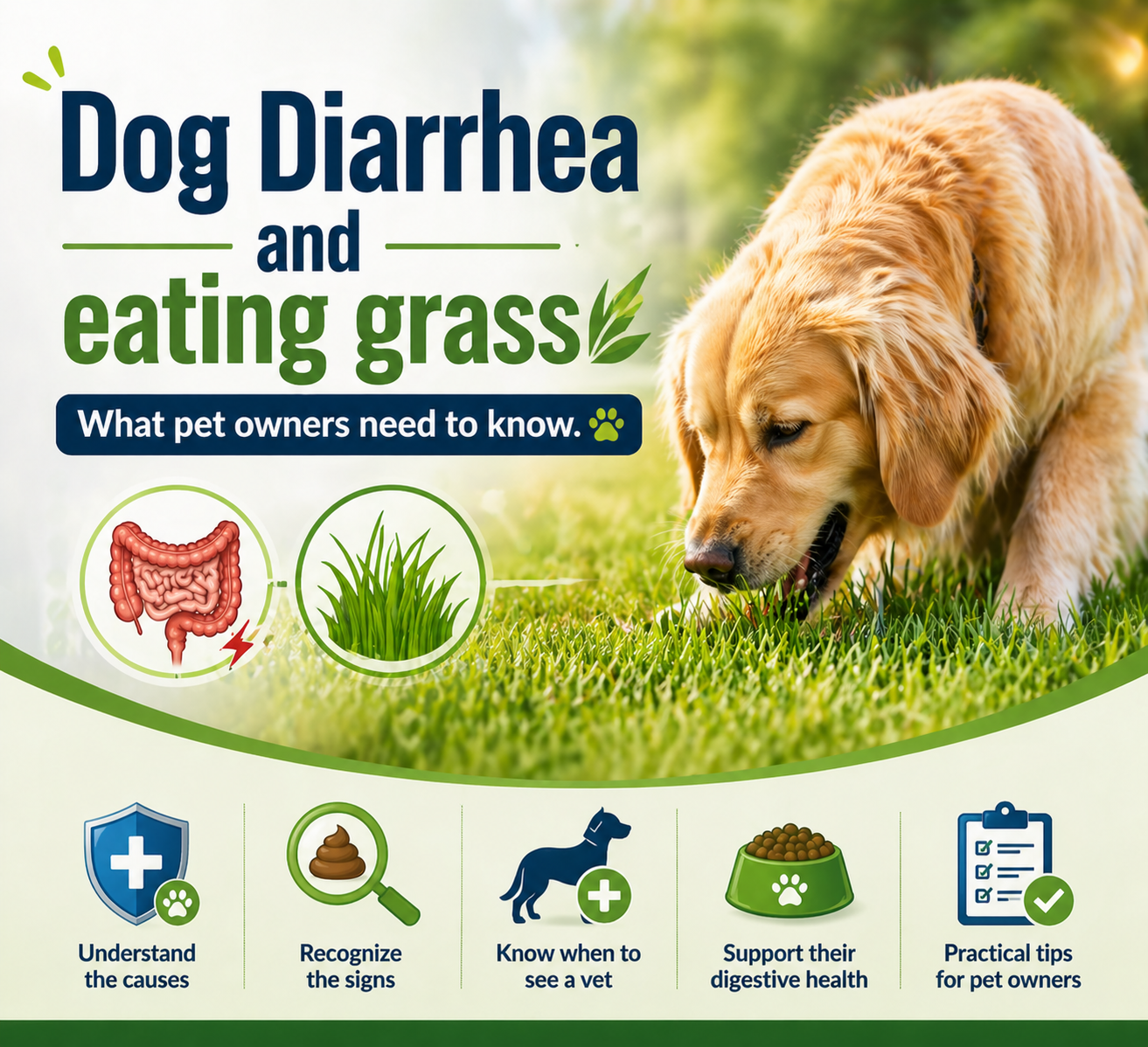
If you own a dog, you may have seen them chow down on grass. It looks strange. Additionally, it can be a little concerning, particularly if diarrhea precedes it. It’s common to find a link between dog diarrhea and eating grass, and this often leaves owners wondering if one is the cause of the other. “Dog Diarrhea and Eating Grass: What Pet Owners Need to Know” is an important topic for many dog owners, as understanding this behavior can help ensure the well-being of your pet.
Why Do Dogs Eat Grass?
Let’s first understand why dogs eat grass before we talk about dog diarrhea and grass eating. There are a number of reasons why dogs eat grass. Not all of them are related to illness.
It has to do with instinct and evolution. Ancestors of the dog fed on all of their prey, including the plant material in the stomachs of plant-eating animals. So plants have always been a component of the dog diet.
Additionally, dogs consume grass to avoid boredom and to sample its flavor. In case of boredom a dog may start to chew grass in the backyard. It keeps them occupied. Or they may just find the taste good. It’s a taste thing.
It could also be a nutritional deficiency. Dogs can be deficient in fiber, so they eat grass to increase their fiber intake. This is one of the main reasons for it.
Finally, an upset stomach can be the cause of grass eating. When the stomach of the dogs is not well, they will eat grass. They seem to do it on purpose – looking for long, coarse blades and gulping them down. This sometimes causes vomiting.
So grass eating isn’t necessarily a cause for concern. It all depends on the context.
Will Grass Give Dogs Diarrhea?
This is a question that we are frequently asked. Will dog poo after eating grass? Well, yes and no.
Eating grass isn’t poisonous for dogs. It is safe when eaten in small quantities. But there are a few reasons why eating grass may lead to diarrhea.
Large Quantities of Grass
Eating a large volume of grass can be difficult to digest. The stomach and intestines aren’t designed to process large amounts of fiber. This may increase the motility of the gut – in other words, food passes through the digestive system more quickly than it should. This can lead to loose stools or diarrhoea.
Grass Treated with Chemicals
This is a significant concern. Our lawns are often sprayed with pesticides, herbicides or fertilizers. If your dog ingests grass that has been treated with these agents, it is likely to cause stomach irritation. Eating grass from a treated lawn and dog diarrhea can be a dangerous combination. Ask your lawn guy if the grass is recently sprayed.
Grass Carrying Parasites or Bacteria
Parasites such as roundworms and giardia can be present in outdoor grass. It can also be contaminated with bacteria like Salmonella. If a dog eats grass that is infected, it can cause a gastrointestinal infection – a common symptom of which is diarrhea.
Swallowing Without Chewing
Dogs who swallow grass without chewing it may irritate their esophagus and stomach. The grass can irritate the stomach lining. This may lead to vomiting, nausea or diarrhoea.
So, is grass bad for dogs’ stomachs? Yes, in these cases. But not because of the grass. It’s often a sign of something else that’s happening in the gut.
Will Eating Grass Make Dogs With Diarrhea Feel Worse?
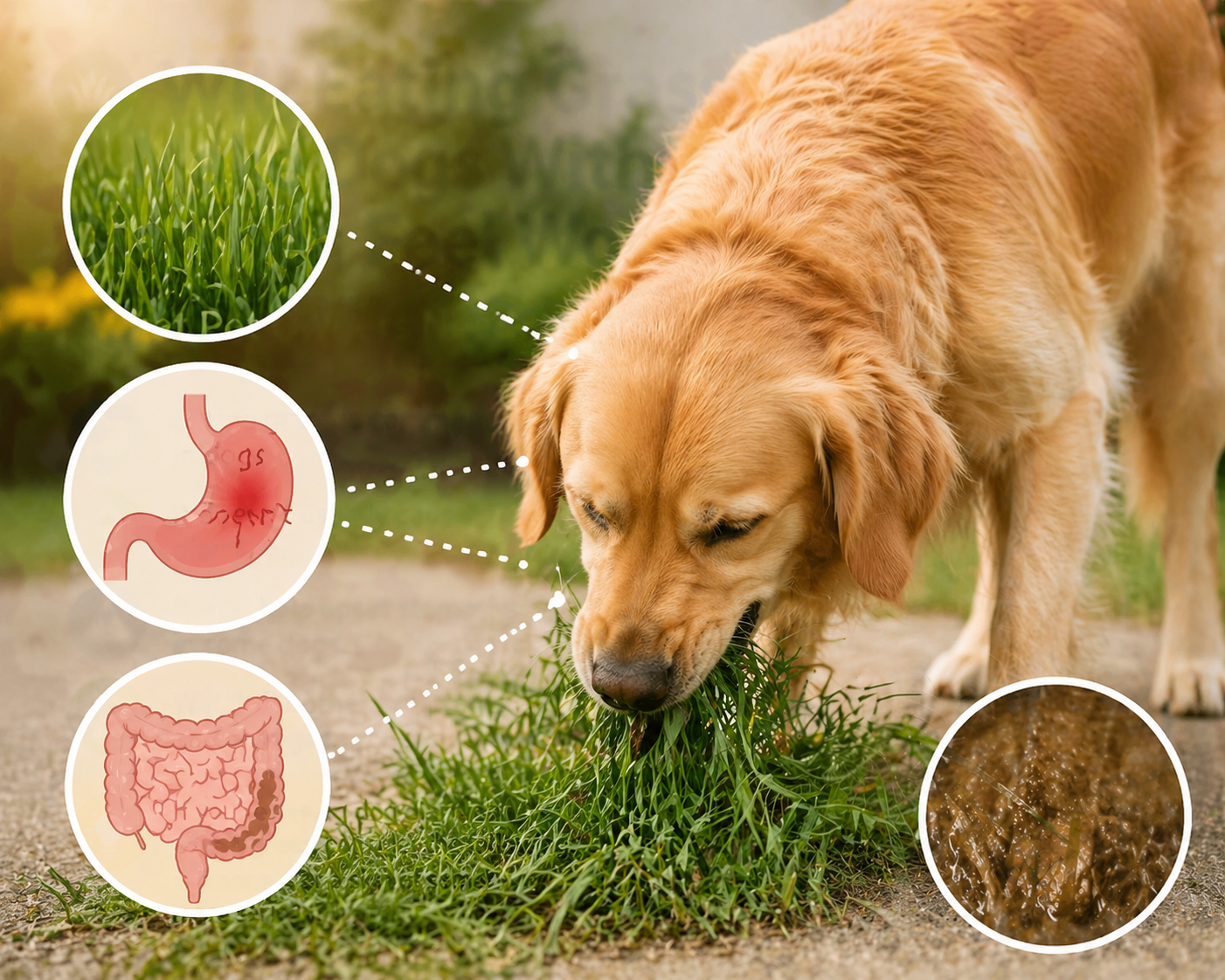
Let’s get tricky. A lot of dogs eat grass when they have a stomach upset. The subsequent diarrhea is not a reaction to the grass – it was already occurring. Eating the grass was a consequence of the upset stomach.
This results in a vicious cycle. The dog feels unwell. The dog eats grass. The dog vomits or has diarrhea. It appears that the grass made the dog sick, but in fact, the dog had a stomachache.
The underlying upset can be caused by:
- Dietary indiscretion – eating something they should not have
- Dietary change – too abrupt a change in diet
- Food intolerance or allergies
- Viral or bacterial infections
- Intestinal parasites
- Inflammatory bowel disease (IBD)
- Stress or anxiet
If your dog shows regular signs of grass eating and diarrhoea, it may be time to consider their general health condition, rather than the grass itself.
When Dog Diarrhea and Eating Grass Is a Problem
If your dog eats grass and has loose stools from time to time, it’s probably not cause for alarm. But there are some warning signs of a more serious issue. Keep an eye out for the following.
Blood in the Stool
Any blood in the stool, whether fresh and bright red or darkly tarry-like, should be dealt with by your veterinarian right away. This is an emergency situation.
Diarrhea for Over 24-48 Hours
Acute diarrhea will usually clear up. However, if you’re dog has suffered from diarrhea for more than 24-48 hours, or has been eating grass, you should see a vet. Diarrhea can cause dehydration, which is potentially life-threatening.
Lethargy and Loss of Appetite
If your dog has dog diarrhea and is eating grass, but also appears lethargic, has no appetite or is disinterested in its environment, they may have an infection or diseased.
Vomiting Along with Diarrhea
It’s never a good symptom for both ends to go. Combinations of vomiting and diarrhea can cause fluid loss and electrolyte imbalances. It’s particularly concerning in young dogs and the elderly.
Eating Grass Obsessively
If your dog is eating grass obsessively – every time they go outside during the day or night – this is not normal. Compulsive grass eating can be a sign of chronic gastrointestinal conditions, acid reflux or even pica, in which dogs ingest non-food items.
When to Know if the Grass or Something Else Is Causing the Diarrhea
If you’re seeing dog diarrhea eating grass, consider the following:
- What recently has my dog eaten? Have they had access to the trash, or eaten scraps or something new?
- Has there been a recent diet change? A sudden change in diet is one of the most common causes of digestive disorder.
- Has the grass been sprayed? Fertilisers and pesticides are possible causes.
- Has it happened before? Infrequent vs common.
- Are there any other symptoms? Being lethargic, vomiting or blood in the diarrhoea changes the game.
A simple diary of the onset of symptoms, what your dog has eaten, and the appearance of the stools may be useful to your veterinarian.
How to Treat Dog Diarrhea from Eating Grass
For most dogs, eating grass and diarrhea are not serious, and can be treated at home. Here’s how to deal with it.
Withhold Food Temporarily
Temporarily remove food. Remove all food for 12-24 hours (water should always be freely available). This will calm the bowel down.
Offer a Bland Diet
Once the fast is over, follow with a bland diet for a couple of days. Boiled chicken and rice are the old favourites. This is because they are easy to digest and will not further upset the stomach. Gradually introduce his normal diet over a few days.
Keep Your Dog Hydrated
Diarrhea causes fluid loss. Provide an abundant supply of fresh, clean water. If the dog isn’t drinking, you can try low-sodium chicken broth or a pet electrolyte solution.
Probiotics for Dogs
A veterinarian-recommended probiotic will help rebalance the gut flora after diarrhea. These are widely available in pet stores, and your vet will be able to recommend a product.
Temporarily Restrict Grass
During the recovery period, try to keep your dog off the grass, particularly untreated lawns or unfamiliar grass.
How to Prevent Dog Diarrhea and Eating Grass
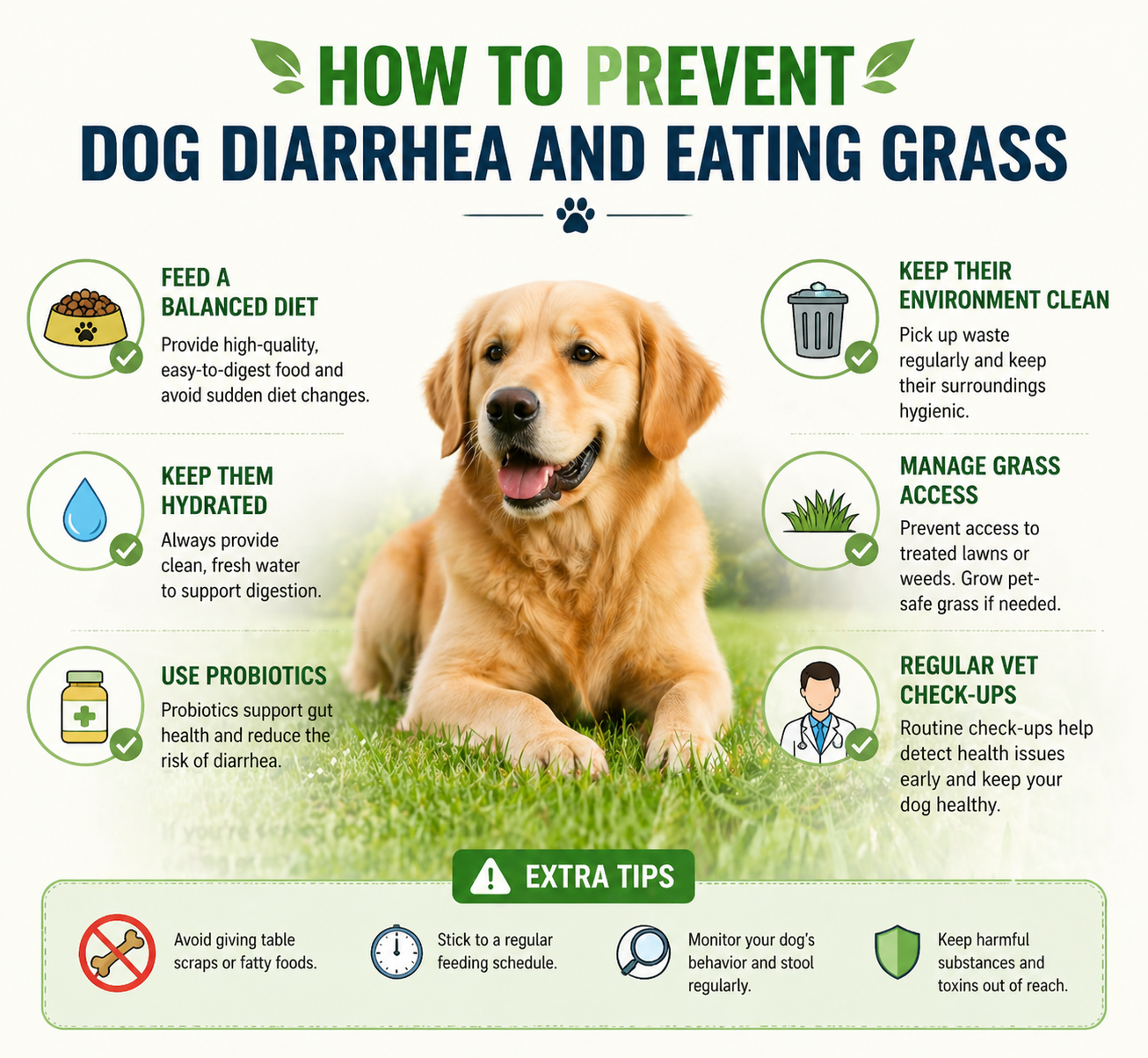
An ounce of prevention is worth a pound of cure. Here are some ways to prevent this issue.
Eat a Balanced, Fiber-Packed Diet
Dogs eat grass, in part, to increase their fiber intake. A diet that is complete and provides enough fiber will help curb your dog’s appetite for grass. Ask your veterinarian if the diet your dog is on is complete and balanced.
Avoid Sudden Diet Changes
If you need to change your dog’s food, do it slowly over 7-10 days. Gradually add more of the new food. This allows the gut bacteria to adapt and not cause diarrhoea.
Make Your Lawn Chemical-Free or Off Limits
If you apply chemicals to your lawn, keep your dog away for the recommended time (typically 24 to 72 hours). Or, set up a particular section of grass that you do not treat or plant a small “dog-safe” patch of grass, such as wheatgrass or barley grass.
Regular Parasite Prevention
Ensure your dog is dewormed as needed and has a good parasite control program. This minimises the chances of contracting intestinal parasites from the soil.
Routine Vet Check-Ups
Wellness check ups are important. If your dog’s dog diarrhea and grass eating are chronic, the vet can perform some diagnostic blood and fecal tests to rule out disease.
When to See Your Vet Right Away
There are some reasons to go to the vet quickly. If you see any of the following:
- Blood in vomit or diarrhea
- Severe dehydration (sunken eyes, dry gums, “tents” when skin is pulled up between fingers)
- Diarrhea for over 48 hours
- History of ingestion of a toxic substance in addition to grass
- Severe weakness or collapse
- Bloating or swollen belly
Bloating, where the dog’s stomach is swollen and distressed, in particular is a sign of gastric dilatation-volvulus (GDV), a life-threatening situation that needs emergency surgery.
Natural Remedies and Supplements That Can Help
While mild cases can be treated at home, some natural treatments can help keep your dog’s digestive system healthy in the long run.
Pumpkin puree (not pumpkin pie filling) is a good source of soluble fiber and can normalise stools. Add a tablespoon or two to your dog’s food for mild symptoms.
Slippery elm bark is a supplement that can soothe your dog’s digestive tract. It’s sold in powdered form and is safe for dogs.
Onion- and garlic-free bone broth offers hydration, minerals and the gut-soothing gelatin.
As with all supplements, check with your veterinarian before giving your dog bone broth, particularly if they are taking medication or have a medical condition.
Puppies and Older Dogs
Puppies and senior dogs are more susceptible to dog diarrhea and grass eating. Puppies can have an immature immune system and easily become dehydrated. Older dogs may have other health issues, including kidney disease, liver disease or IBD, that can complicate their GI symptoms.
For these dogs, don’t wait until 48 hours to contact your vet. Act sooner. What a healthy, mature dog may easily overcome can be deadly for a young or senior dog.
Conclusion: Understanding Dog Diarrhea and Eating Grass
It’s common for dog diarrhea and grass eating to go hand in hand, but the link isn’t quite as straightforward as it may appear. Grass-eating doesn’t necessarily lead to diarrhea. Instead, the dog was likely to be suffering from an upset stomach, and eating grass soothed their tummy.
However, does grass make dogs poo? Yes, it can – especially if large quantities of grass are consumed, the grass is chemically treated, or is harbouring parasites. Will all dogs get diarrhea if they eat grass? No. It’s usually not a problem for healthy dogs to eat grass.
The key is observation. Take note of how frequently it occurs, any other symptoms, and what’s going on. Most mild cases will clear up with a few days’ fast and bland food. However, if it happens frequently, or you see severe symptoms, see a vet.
Dogs can’t verbalise when they are unwell. Observing their behaviour – including eating grass – is a vital part of their health care.