
Introduction
Wellness is considered by most as just eating healthy and exercising. However, The 9 Dimensions of Wellness: Guide to Complete Wellness reveals that wellness is much more than just that. The 9 dimensions of wellness provide a comprehensive image of a healthy and fulfilling life, with each dimension playing an important role. The combination of these dimensions forms a framework through which you can assess your general well-being.
The idea of a wellness model has been developing throughout the decades. Initial definitions focused only on physical health, but today, professionals agree that wellness is multidimensional. It encompasses everything from your mood and economic position to how you feel about the world around you. Understanding the full scope of The 9 Dimensions of Wellness: Guide to Complete Wellness can help you identify areas of improvement, set meaningful goals, and lead a more purposeful life.
In this article, we break down each of the 9 dimensions of wellness in straightforward, practical terms. You’ll learn what each dimension entails, why it’s important, and how to nurture it in your daily life.
What Are the 9 Dimensions of Wellness?
The wellness model has developed with time. Initial models had only three components of total health, and they were physical, mental and social. Subsequently, these eight dimensions of wellness were adopted as a standard, which was created by Dr. Margaret Swarbrick. In more recent times, researchers and wellness practitioners have introduced a ninth dimension since they have acknowledged that a complete definition of well-being has to encompass even more areas of human life.
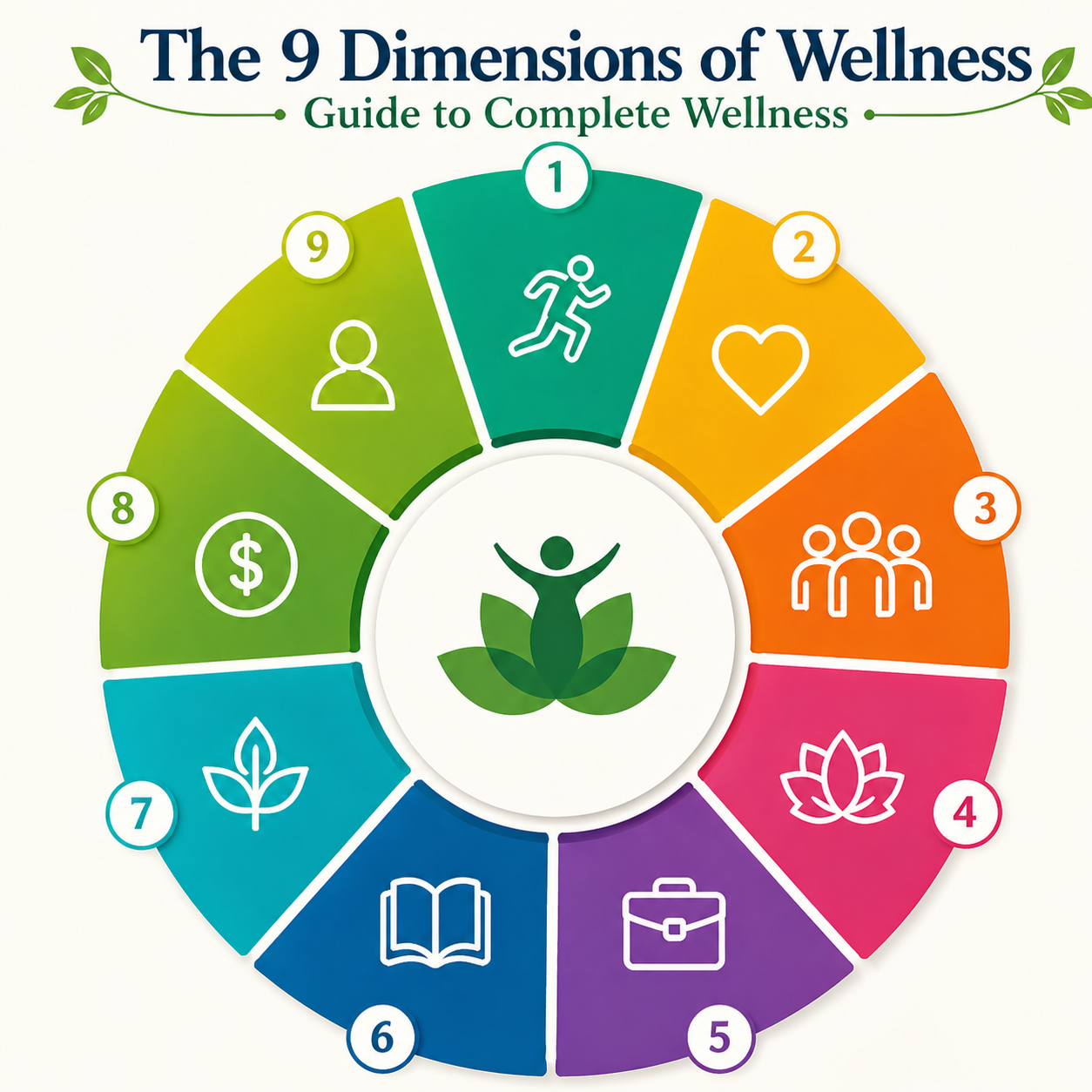
There are so many aspects of wellness? Wellness has nine dimensions that include:
- Physical Wellness
- Emotional Wellness
- Social Wellness
- Intellectual Wellness
- Spiritual Wellness
- Environmental Wellness
- Occupational Wellness
- Financial Wellness
- Cultural/ Multicultural Wellness.
All the dimensions relate to each other. Failing to take care of one aspect can drag the others. This is why the health and wellness wheel is so potent as a visual tool – it demonstrates the balance between all the nine areas.
1 Physical Wellness – The core of the 9 Dimensions of Wellness.
The initial dimension that comes to the mind of people is physical wellness. It involves the functionality of your body. Physical health dimension refers to capacity to ensure one has a healthy body by engaging in consistent exercises, proper nutrition, sleep and preventive health.
Physical health does not only mean the lack of illness. It is concerned with developing strength, flexibility and endurance. It also involves shunning bad habits such as smoking or over drinking. Balanced diets that are rich in fruits, vegetables, whole grains, and lean proteins are a key pillar of physical health promoted by WHO dimension nutrition standards.
The mere daily routines are significant. Walk for 30 minutes. Drink enough water. Get 7-9 hours of sleep per night. Such minor decisions create a good physical base to the rest of your wellness process.
2 Emotional Wellness – Zero to One.
Emotional wellness refers to feeling healthy and in control of your emotions. It encompasses self-awareness, resiliency, and stress coping. Emotionally sound individuals are able to work out their feelings in an affirmative manner. They also recover after failures and have a positive attitude even in hard moments.
Mental, emotional and physical health are closely intertwined. Stress in the long run is damaging to the body. Unspoken emotions may result in anxiety and depression. This is the reason why emotional wellness is not a mere physical, mental, and social health, but it is a dimension of its own, which should be paid special attention to.
Emotional wellness can be achieved through journaling, mindfulness, and therapy. It is also good to practice gratitude on a daily basis, which will help you change your mindset. With time, these habits develop emotional strength and that sustains all the other dimensions.
3 Social Wellness – Establishing Meaningful Relationships.
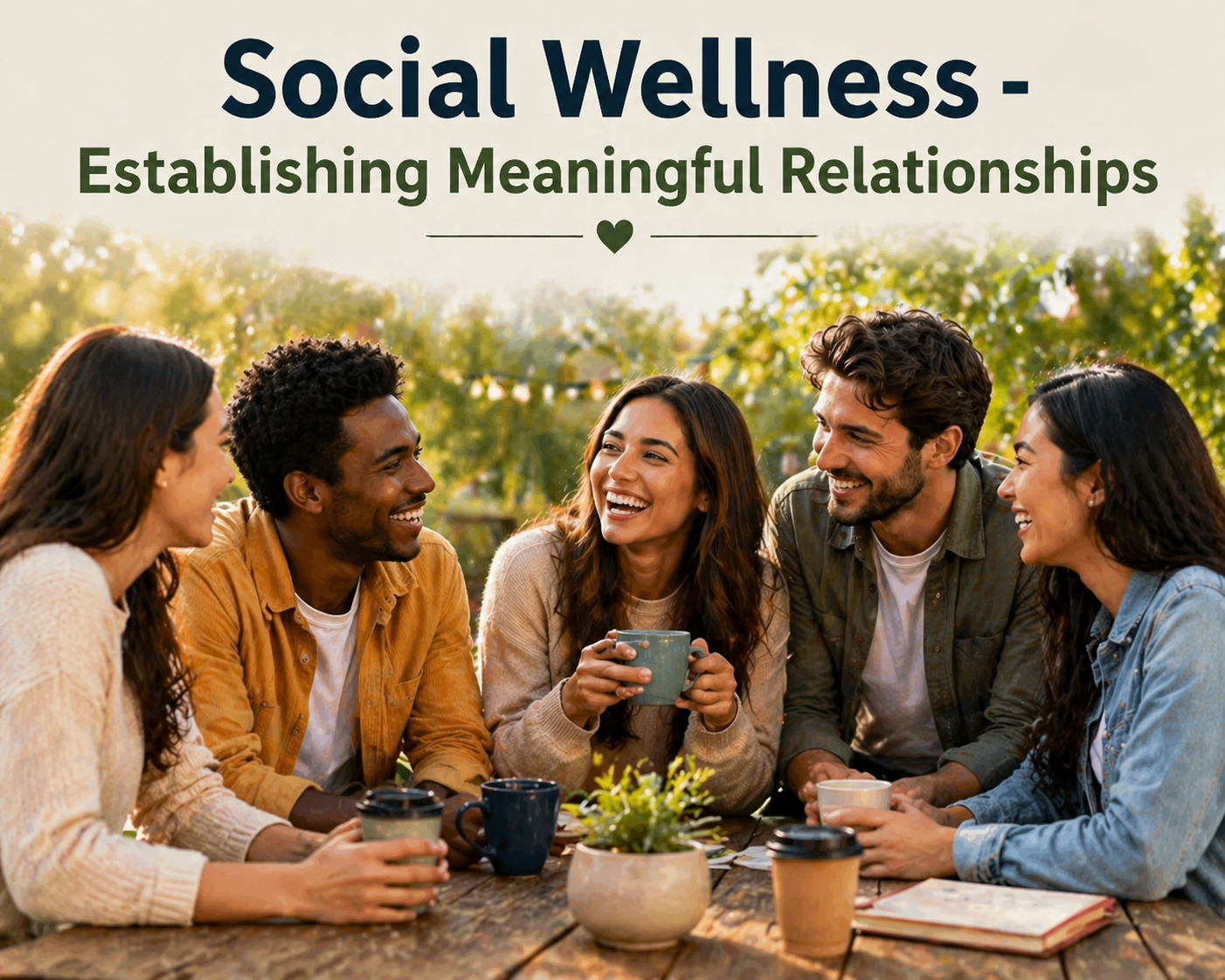
Man is a social animal. Social wellness is how well you relate with others and how well you are able to get along with them. It is comprised of communication skills, empathy and being able to create and sustain healthy relationships. Close social connection has been associated with increased life span, enhanced immunity and reduced depressions.
Social wellness is a good example when posing the question of how the various aspects of health are related to each other. Bad relationships cause stress and this is detrimental to the physical health. Being lonely has a mental health effect. Social support on the other hand enhances emotional resilience and even enhances physical recovery after sickness.
Put money on your relationships. Contact a friend. Become a member of a community group. Volunteer your time. These activities have a direct effect of bolstering your social health and consequently, promote the larger aspects of health.
4 Intellectual Wellness – Nourishing your Curiosity.
Intellectual wellness is concerned with maintaining your brain. It entails lifelong learning, critical thinking, and creative problem-solving. Good intellectual health is indicated by reading books, learning new skills, stimulating conversations, and exploring new ideas.
One of the four aspects of health that most models of wellness emphasize is intellectual development, along with physical, emotional, and social well-being. However, in The 9 Dimensions of Wellness: Guide to Complete Wellness model, intellectual wellness is given its own special place—and deservedly so. It challenges the mind, helping to preserve brain capacity and ensuring that your thinking remains clear and receptive.
Make it a point to learn something new each week. Complete an online course. Start a new hobby. Challenge your assumptions. Your brain thrives on novelty and challenge, and The 9 Dimensions of Wellness: Guide to Complete Wellness encourages continuous growth in your life.
5 Spiritual Wellness – Purpose and Meaning.
Spiritual wellness is not necessarily religion. It is what makes you feel your purpose, meaning and belonging to something bigger than yourself. Physical, mental, spiritual and emotional health make you the person you are. The thread that connects your actions and your values is spiritual wellness.
Individuals who are highly spiritually well tend to say that they are more at peace, clear, and directional in life. They are in harmony with their values. They are better able to live with adversity as they have a great sense of why they are here. Spiritual wellness grounds you whether it is through prayer, meditation, time in nature or service to others.
Questions to ask yourself: What makes my life meaningful? What do I consider my core values? In what ways do I live in harmony with them? These are the reflection questions that will be the beginning of enhancing your spiritual health.
6 Environmental Wellness – Your Space Shapes Your Health.
Environmental wellness refers to the interaction between you and the world around you. It encompasses your own living environment, your local neighborhood, and the broader natural environment. An environment that is untidy, dirty, or unsafe negatively impacts both mental and physical well-being. On the other hand, a clean, organized, and nature-filled environment promotes overall health and wellness.
In The 9 Dimensions of Wellness: Guide to Complete Wellness, being a good steward of the environment is also an important aspect. Environmental wellness includes reducing waste, conserving energy, and spending time outdoors. When you nurture the earth, you are also nurturing yourself.
Start small. Declutter your home. Add some plants to your desk. Take a 20-minute walk each day. These simple steps can significantly enhance your mood and well-being. Environmental wellness, while often overlooked among The 9 Dimensions of Wellness: Guide to Complete Wellness, has a profound impact on almost all other dimensions of wellness.
7 Occupational Wellness -Finding Satisfaction in What You Do.
Occupational wellness is connected with your work relationship. It is not only regarding job satisfaction. It also consists of the work-life balance, career development, and the sense that your work is important to you and your competencies. Individuals with occupational wellness are not tired of work, but are actually energized.
Occupational wellness is always a question when the eight areas of wellness or the nine are asked. This is because the majority of adults devote a third of their lives at work. Thus, your attitude towards your job would have a significant influence on the quality of life in general.
Establish work boundaries. Find jobs that are intriguing and motivating. Festivities about your career successes. When you feel not connected with what you are doing, think about what you can do to change to enhance your occupational wellness- even in a minor way.
8 Financial Wellness – Having a Secure Future Gives Peace of Mind.
One of the major causes of anxiety and depression in the world is financial stress. Financial wellness: A healthy relationship with money. It incorporates efficient budgeting, future savings, debts, and making sound financial choices. Financial wellness is something that does not require wealth, you just need to feel that you are in control of your finances.
Emotional and physical wellness is directly linked with financial wellness. Once you have your finances in check, you lose stress. This leads to better sleep, a stronger relationship life as well as your well being. This is a true illustration of the interrelationship between elements of health and wellness as a unit.
Track your spending. Create an emergency fund. Get familiar with the fundamentals of investing. It is a skill that you can learn at any age, financial literacy. Even small increases in financial health can bring a lot of positive changes to your health.
9 Cultural Wellness -Being diverse in the 9 Dimensions of Wellness.
The latest dimension identified under the holistic wellness models is cultural wellness also referred to as multicultural wellness. It means appreciating, valuing and knowing cultural differences, not only your culture but also the culture of others. It is also about exploring your own bias and assumptions and striving to achieve more cultural humility.
Social wellness is enhanced by cultural wellness. By interacting with various viewpoints, you develop intellectual wellness, as well. Cultural wellness leads to a reduction in discrimination and increased collective well-being in the communities. This dimension recognizes that not everyone has the same experience of health – and that real wellness is culturally aware.
Practice active listening. Find stories and experiences that are different. Think about your cultural identity and values. These actions will create cultural awareness and increase your ability to empathize, which will enhance all 9 dimensions of your wellness.
What are some of the interrelationships between the various dimensions of health?
Among the top lessons of the 9 dimensions of wellness model is the fact that one dimension is not independent of another. They are highly interwoven. As an illustration, lack of sleep (physical) makes one more irritable (emotional), puts a strain on relationships (social), and makes one less focused (intellectual). Financial stress (financial) leads to anxiety (emotional), sleep disturbances (physical) and poor performance at work (occupational).
It is this interconnection that makes a good definition of wellness not merely the lack of disease. Wellness is a process of becoming conscious of, and making decisions towards a more successful and balanced life, and it is dynamic and active. It does not only involve physical, mental and social wellbeing but is a complete round experience.
This is visualized in the health and wellness wheel. The spokes are the different dimensions. With equal spokes, the wheel will roll evenly. Ride is bumpy when one is short. This is why it is important to take care of all the nine dimensions in order to have an all-encompassing health.
What Does Wellness Not Look Like?
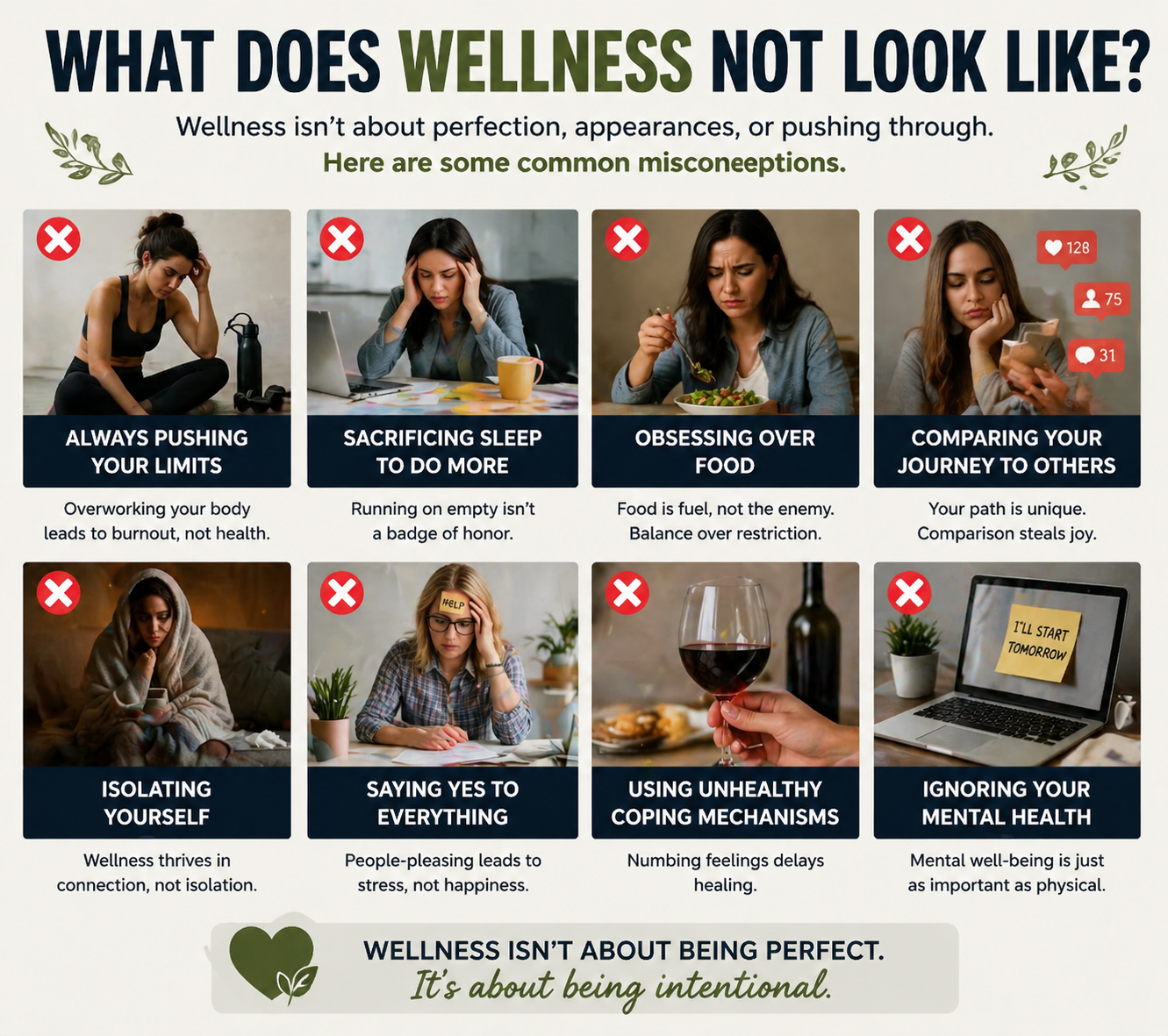
Wellness is a misconceived notion. What is not wellness like? It cannot be seen as a picture of perfection. It is not all about a perfect body, never being depressed, or being wealthy.
Wellness is not a place to get to but a lifelong process of knowing oneself and conscious living.
Wellness does not appear like ignoring one aspect in favor of another aspect. A person who is obsessive yet has nothing and no one meaningful to her/his life cannot be considered well. It is also a misstep when someone is a successful person, financially sound but is constantly stressed and is emotionally detached.
Authentic wellness resembles equilibrium, self-love, and unceasing development in all five dimensions of health and more. It appears different to each individual since no two lives are the same, every life has its own challenges, strengths, and situations.
How to use the 9 Dimensions of Wellness in your life.
Using the 9 dimensions of wellness does not mean one has to make a radical change in lifestyle. Begin with a fair evaluation. On the health and wellness wheel, rate each dimension out of 10. Determine the dimensions that are most neglected. Next select one small, particular step to better each area.
The following are some of the practical steps that can be taken to reinforce each dimension:
- Physical: Walk daily, focus on whole food and adhere to WHO dimension nutrition criteria of balanced eating.
- Emotional: Be mindful, write down your emotions, and consult a professional when necessary.
- Social: Make regular appointments with your loved ones and participate in your community.
- Intellectual: Read extensively, attend classes, and accept challenges.
- Spiritual: Meditate, consider what is important to you, and engage in activities that make your life worth living.
- Environmental: Clean up your home, minimize waste, and enjoy nature.
- Work-related: Establish work boundaries, pursue career development and make your work relevant to your principles.
- Financial: Prepare a budget, save money and invest in financial literacy.
- Cultural: Educate about the other cultures, fight stereotypes, and be empathetic.
Stability is more important than vehemence. Wellness occurs in small daily steps, which are repeated over time. Moreover, when you are becoming better at one dimension, you will find that you are not only improving but will have a lot of positive spill over in other dimensions.
Conclusion: Live a Well-ROUNDED Life with All 9 Dimensions of Wellness.
The 9 dimensions of wellness offer an effective, overall perspective on health and well-being. They help us to remember that wellness does not only mean being physically fit. It concerns emotional stability, significant connections, intellectual intrigue, spiritual foundation, healthy setting, rewarding employment, financial stability and cultural consciousness.
The definitions of health, wellness and well-being are multi-layered. Once you know them in and out, you no longer go in search of a simple definition of health but rather live with more purpose and moderation. The nine dimensions of wellness are not a checklist to check. They are life long practices to be undertaken.
Start today. Choose a dimension that is out of balance. Make a little step to cultivate it. Then see how that one act starts to change not only that aspect, but your whole wellbeing. This is the strength of life on the 9 dimensions of wellness.