
Introduction
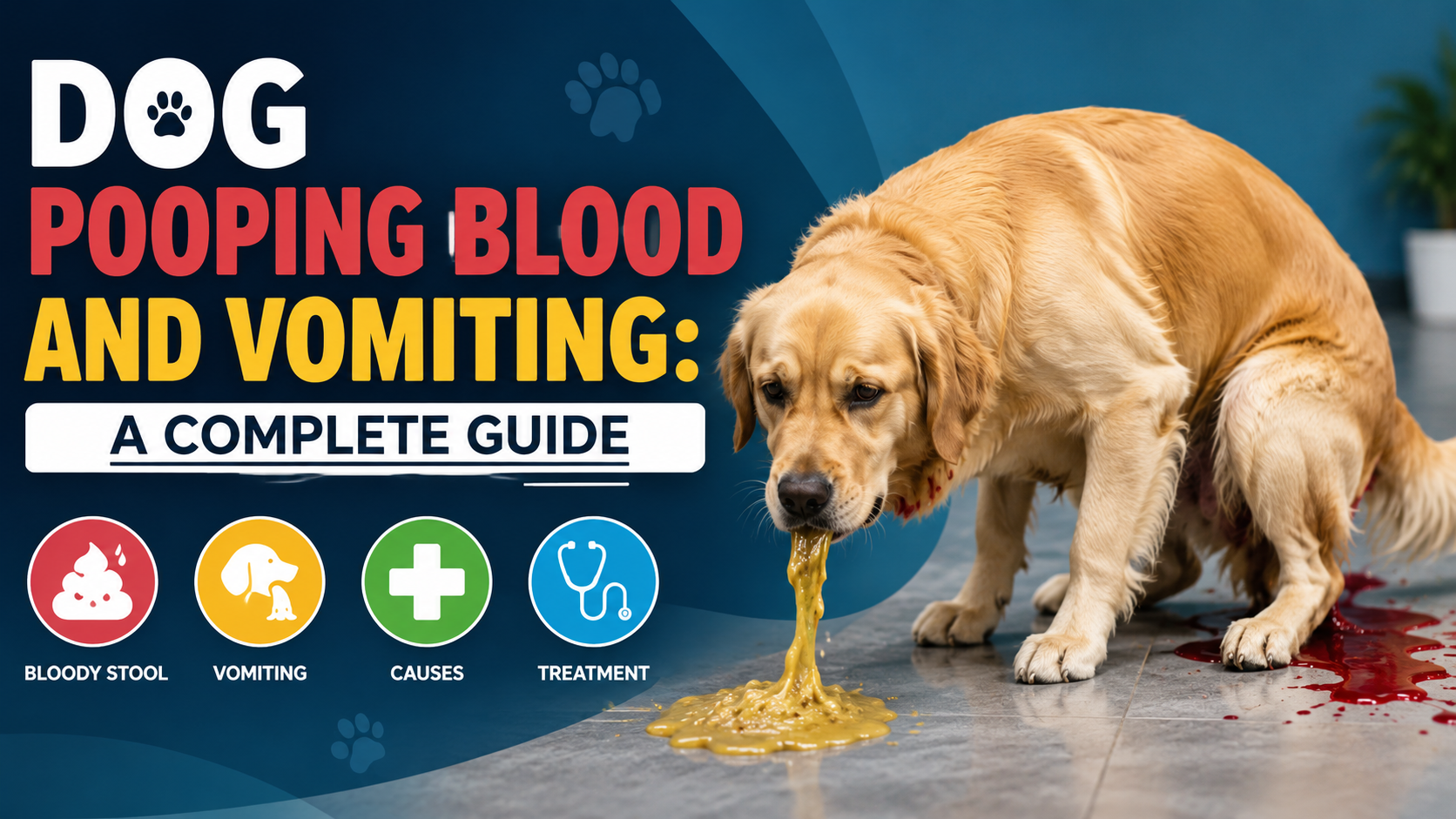
Fortunately, there are many treatments available for many factors, particularly if identified early. You will find out what is most common cause of these symptoms, what signs are to watch for and what you can do to help your pooch.
What is causing this dog to have blood and vomit?
If a dog is both pooping and vomiting blood, he is typically suffering from something that’s irritating or damaging the gastrointestinal (GI) tract. The GI tract runs from the mouth all the way to the rectum. Any blockage on this route may lead to vomiting and bloody stools.
There are two kinds of blood that could be in your dog’s stool. When the blood is bright red, it is termed as hematochezia. Typically it is from the lower intestine or colon. Melena refers to a tarry, black stool that is dark and black. This type is associated with bleeding in the upper gastrointestinal tract (small intestine or stomach).
The two are worrisome. Most of the time, however, melena is more serious. It means that the blood has been broken down, an internal bleeding higher up in the body.
The most frequent causes of a dog with diarrhoea and blood are
There are many conditions that a dog with diarrhoea and blood may have. Some are mild, others are serious and need immediate veterinary care. Here are the most common causes.
1. Dietary Indiscretion
Dogs consumes items that they’re not supposed to consume. Any of the above can cause an upset stomach and intestines. This is a very frequently encountered cause of vomiting and bloody, loose stool in dogs. Often temporary and will pass away but not always.
2. Hemorrhagic Gastroenteritis (HGE)
In the past, HGE was known as Acute Hemorrhagic Diarrhea Syndrome (AHDS), and it is characterized by a sudden onset and severe bloody diarrhea and vomiting. Can appear rapidly in otherwise normal dogs. The stool may appear as a raspberry jam. HGE can cause dogs to become very dehydrated within hours. It is an emergency condition that needs veterinary attention immediately.
3. Parvovirus
Parvo, a highly contagious and fatal viral illness, is a serious disease in dogs. Primarily seen in unvaccinated puppies and young dogs. Severe vomiting, bloody diarrhea, lethargy and loss of appetite are symptoms. Parvovirus infects the gastrointestinal and immune systems. If not treated it is fatal. If you think your dog might be infected with parvo, don’t delay and get it to the veterinarian right away.
4. Intestinal Parasites
Hookworms, roundworms and whipworms are worms that can lead to intestinal bleeding. Bloody watery diarrhea can also result from other parasites, such as Giardia and coccidia. Puppies are particularly at risk. These parasites can be identified in a veterinary exam of the feces.
5. Bacterial Infections
A dog can get Salmonella, E. coli and Campylobacter in his gut. These infections are commonly associated with food and water borne origin. If the infection is caused by bacteria, the dog might have diarrhea, vomiting, fever and/or belly pain.
6. Rougars and Hedgehogs
Some chemicals used around the home, rat poison, some human medicines and toxic plants can cause damage to the G.I. tract, leading to internal bleeding. If your dog is exposed to any of these and suddenly vomits and defecates blood, it is a poisoning emergency!
The blockage of the intestine or ingestion of foreign material.
Some dogs swallow toys, bones, socks or other items. They can get lodged in the intestines and cause an obstruction. Symptoms are vomiting, bloody stools, bloating and pain. This is an emergency surgery.
7. Stress Colitis
Colitis is the inflammation of the colon, and can be caused by emotional or physical stress. It produces soft, mucous stools which can contain blood. Common triggers include changes in the environment, boarding, traveling or new pets.
8. Inflammatory Bowel Disease (IBD)
In IBD, the immune system attacks the GI tract, resulting in a chronic condition. Some dogs may have chronic vomiting, diarrhea with blood and mucus, and a loss of weight in connection with IBD.
9. Cancer
Tumours in the digestive system may lead to GI bleeding in older dogs. Less common but important to rule out, particularly when there is no identifiable cause of the symptoms.
What Does It Mean If My Dog Is Pooping Blood And Throwing Up Foam?
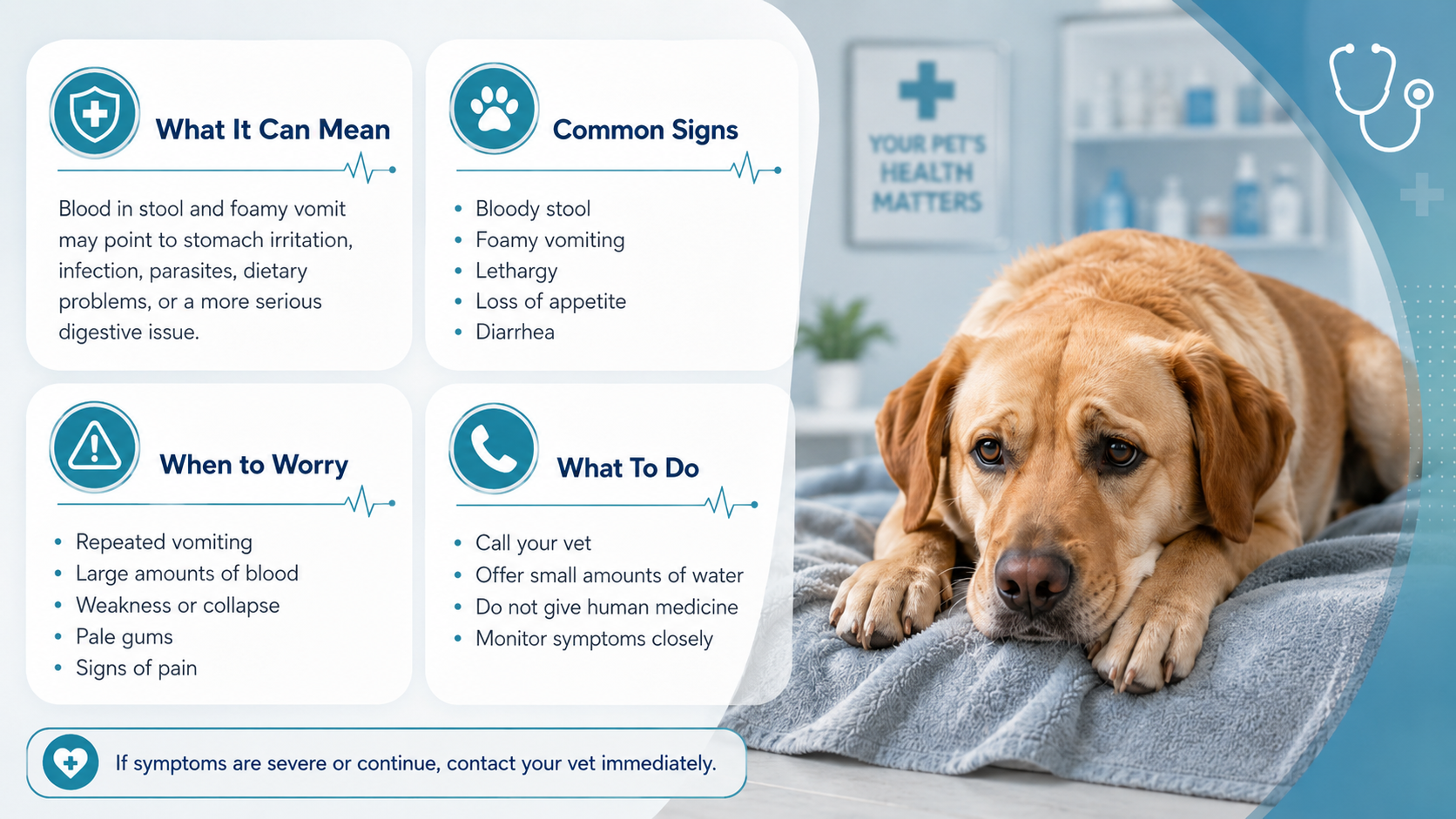
If you notice your dog is having diarrhea (pooping blood) and vomiting vomits with foam, it is likely that the stomach is empty and irritated. The white or yellow foam is actually a mixture of digestive fluid and bile. Occurs when a dog vomits on an empty stomach.
The presence of this in addition to bloody stool means that the upper and lower GI tracts are involved. It could point to an infection, HGE or poisoning. Do not dismiss it. Please contact your veterinarian immediately if your dog is vomiting up foam and blood.
However, sometimes dogs will vomit foam up first thing in the morning because of what is called bilious vomiting syndrome. By itself, it isn’t an issue. When added to blood in the stool, it’s a different matter.
Signs and symptoms of blood and vomit in a dog are likely a medical emergency
Not all cases come down to that of a 3am trip to the emergency vet. However, there are certain warning signs which require action to be taken quickly. If your dog displays any of the following, rush him/her to the vet’s office:
- Large amounts of blood in the stool (not just a small streak)
- Bloody vomiting or vomiting that is like coffee grounds.
- Pale, white or blue gums — means shock or severe blood loss has occurred
- When the patient becomes very drowsy or collapses.
- Swollen or distended belly
- Fast or weak breathing,
- Persistent vomiting (vomiting for over 3 or 4 times in a short amount of time)
- No urine output, or any dehydration – dry gums, sunken eyes.
- Suspected poisoning or foreign object ingestion
- Puppies that exhibit these symptoms will dehydrate and lose condition much quicker than an adult dog.
If none of these apply, it’s always a good idea to call your veterinarian if you are not sure. It’s better to call and be reassured than wait and see if it gets worse.
When your dog has blood in the poo, what do you do?
Here are some steps you can take to help your dog and aid in the diagnosis by the veterinarian.
Step 1: Stay calm. Your dog is able to detect your nervousness. Take a deep breath before handling your dog.
Step 2: Check for other symptoms. Observe the number of times your dog has been vomiting, the color and consistency of vomit, and the nature of the stool. Is it shiny red or dark and tarry?
Step 3: Search for a probable cause. Has your dog consumed anything unusual? Have they ingested garbage, poisons, or drugs?
No. 4: Do not administer human medicines. Human pain relievers, such as ibuprofen, aspirin, and antacids, can be poisonous to dogs. Don’t administer these medications without veterinary advice.
Step 5: temporarily deprive a few days of food. If your dog is vomiting often, fast him for 2-4 hours until his stomach is calmed. Have fresh water at all times.
Step 6: Make sure that your dog is comfortable and warm. Do not exercise or put yourself under stress during this period.
Step 7: Phone and/or visit your veterinarian. Make sure to include clear diagnosis of symptoms. The veterinarian may request that you bring a stool sample. If possible, gather in a clean container.
What will the vet do?
Your veterinarian will begin by examining your animal. They will monitor hydration, gums and abdominal tenderness. They will prescribe:
- Fecal tests to check for parasites or bacteria
- Blood tests to evaluate organ function and blood cell counts
- X-rays or ultrasound to check for blockages and tumors.
- All unvaccined puppies should be tested for parvo.
Treatment will be dependent on diagnosis. Treatment includes anti-nausea drugs, anti-bacterial drugs, IV fluids for dehydration, deworming and/or surgery for blockage.
How to stop your dog from having blood in its poop and vomit
It’s better to prevent a problem than to treat it after it occurs. Here are some practical ways to decrease the risk:
Maintain up-to-date immunizations. Vaccination is available to prevent parvovirus. Ensure that your dog is up to date on all needed vaccinations.
Follow a parasite control program. Worm and heartworm monthly preventatives keep worm and heartworm diseases out of your pet.
Provide good-quality food at regular intervals. Don’t make drastic changes to your diet. Introduce new foods over a 7-10 day period.
Dog-proof your home. Store chemicals, medicines and waste. Look for poisonous plants in your yard.
Regular veterinary examinations. Checking regularly – every year – ensures that the issues are identified before they become an emergency.
Manage stress. If your dog is a stress colitis dog, find out what it is that triggers its symptoms and discuss management with your veterinarian.
Frequently Asked Questions about Dog Pooping Blood & Vomiting
Will a dog recover from HGE spontaneously if not treated?
While mild cases may get better, dehydration can lead to death in a short period of time. Treatment is strongly recommended for vets. Don’t attempt to treat it at home.
Is there any normal amount of blood in a dogs feces after eating a bone?
Dogs sometimes eat a hard bone and eat through it, causing small bright red streaks of blood to show up, but this is not a problem. If it does occur again, or if it is accompanied by vomiting, however, call a vet.
My puppy is having blood in poop and vomit. Is it parvo?
It could be. Parvo is most likely to occur in puppies that have not been vaccinated. Don’t wait to discover. Bring your puppy right to the vet; parvo can progress very quickly.
Does stress make dogs poop blood?
Yes. Blood in stools may be an indication of stress colitis. It occurs more often in anxious dogs. It is not as serious as HGE or parvo, but should be diagnosed and cared for correctly.
Conclusion
If a dog is vomiting and pooping blood, it’s not something you can just shrug off. Your dog needs attention – whether it’s from an upset stomach or something more serious such as parvovirus or HGE. When you see these two symptoms together, you know that something is going on in the GI tract that it is under a lot of stress.
Be alert and act promptly when warning signs are observed. If you have any questions, consult your veterinarian. Early intervention is a key to outcomes! Your dog relies on you for clues when they are feeling off and they are taking the first step to seeking answers.
Be sensitive, diligent and act on intuition. The first step to a healthy, happy dog is a responsible, knowledgeable owner.