
Introduction
You will find out why your dog will not eat and vomits, what are all the warning signs and what are the steps that you should take. It can save your dog’s life if you can tell whether it’s a stomach upset or something serious.
Some dogs will refuse their food and water and vomit for no apparent reason.
1. Eating something they shouldn’t (Dietary Indiscretion)
Dogs have a tendency to chew on what they shouldn’t chew. These types of things can cause stomach upset in dogs, such as garbage, spoiled food, grass, sticks or anything found on the floor. This is known as dietary indiscretion and is one of the most frequent causes of dogs not eating and vomiting.
If a dog consumes something that is irritating or poisonous, the dog will attempt to vomit the substance from their stomach. The dog can vomit several times, become disinterested in food, and reject water as it may induce more vomiting.
Most mild cases recover with rest in 12-24 hours by feeding the dog with bland food. If the dog consumed something poisonous, such as chocolate, grapes, xylitol or rat poison, however, call your vet immediately.
2. Gastroenteritis
Gastroenteritis refers to the inflammation of stomach and intestines. It is a very common cause of dogs losing their appetite, making them not eat or drink and experiencing vomiting. The dog can also experience diarrhea in addition to vomiting.
Gastroenteritis can be caused by bacteria, viruses, parasites or food sensitivities. The severity of the condition varies from mild to severe. When a dog suffers from severe gastroenteritis, it can become dehydrated rapidly, particularly if the dog does not consume water.
3. Parvovirus
Parvovirus is a deadly virus. Occurs most often in unvaccinated puppies, but may occur in adult dogs. A dog with parvo will not eat or drink, will have bloody diarrhea and will vomit a lot.
Throwing up with a foul-smelling, bloody stool and if your dog is not eating or drinking, parvo may be a good guess. This is a serious condition that needs immediate veterinary care. Take no time for deliberation.
4. Pancreatitis
Pancreatitis occurs when the pancreas becomes inflamed. Can be provoked by eating too much high fat food or table scraps. A dog with pancreatitis will most likely be hunched, not eat, vomit many times and not drink water.
This can be either mild or severe. If the pancreatitis is severe, it’s a life-threatening condition that creates severe abdominal pain. Sudden changes in behavior such as hunching of the back, reluctance to eat or drink, may indicate that your dog has developed pancreatitis.
5. Intestinal Obstruction
A dog may swallow a toy, bone, piece of cloth or other foreign body which can become lodged in its digestive system. This is known as intestinal blockage. This is a medical emergency!
If a dog develops a blockage, it will vomit continually, not eat and drink, and get weaker over time. Abdomen can appear swollen or painful to the touch. An intestinal obstruction in the absence of surgery may prove life threatening in a few hours.
6. Kidney Disease or Liver Disease
Nausea, vomiting, and anorexia happens in both chronic kidney disease and liver diseases. They accumulate these toxins in the blood which makes the dog feel constantly sick.
If a dog (particularly an older dog) refuses to eat or drink and vomits for several days, you may have to consider organ dysfunction. This can be quickly confirmed with blood tests from your veterinarian.
7. Heatstroke
During hot weather, dogs can suffer from heatstroke. Exposed to excessive heat, a dog might not eat, drink water, vomit and become disoriented or collapse.
Heatstroke is a serious condition. Take your dog to a cool place right away and call your veterinarian.
8. Motion Sickness or Anxiety
Some dogs get car sick. Others experience intense anxiety when faced with new experiences or in the wake of an upsetting experience. Both illnesses may lead a dog to refuse food, become nauseous and vomit.
This kind of vomiting is often brief and will self resolve as soon as the stressor is eliminated.
When a Dog Won’t Eat and She’s Sick — And It’s an Emergency
Not every case of a dog not eating or drinking throwing up is an emergency. However, there are certain indicators that tell you that your dog needs immediate veterinary attention. Don’t overlook these warning signs.
If your dog exhibits any of these symptoms, get emergency vet care right away:
- Blood vomiting or vomiting of material which resembles coffee grounds
- Swollen or firm belly.
- Excessive drowsiness or weakness to standing up.
- Gums that are pale or white or blue.
- Repeated vomiting (more than 3-4 times over a few hours)
- Severe pain (whimpering, hunched, restlessness)
- Abdominal pain and diarrhea with blood.
- If ingestion of a poison or foreign object is suspected.
- The puppy is unvaccinated and exhibits these symptoms (which might be indicative of parvo)
- Illness that does not get better within 24 hours.
All of these are symptoms that your dog has something serious going on in its body. In those instances, time is of the essence.
How much can a dog survive without food and water?
It’s a significant question. In some healthy, adult dog cases, a dog can go for as long as 3-5 days without eating. But water is so much more important.
Even without food, a dog can become seriously dehydrated in 24 hours if he is not drinking water; and if he is vomiting as well. Dogs can become dehydrated and suffer organ failure from dehydration.
At home, you can look for signs of dehydration by pinching the skin on the back of your dog’s neck. If it comes back right back, your dog is watered up. If it remains tented or returns slowly, your dog is probably already dehydrated and should be given fluids by a vet.
What To Do When Your Dog Won’t Eat and Vomits
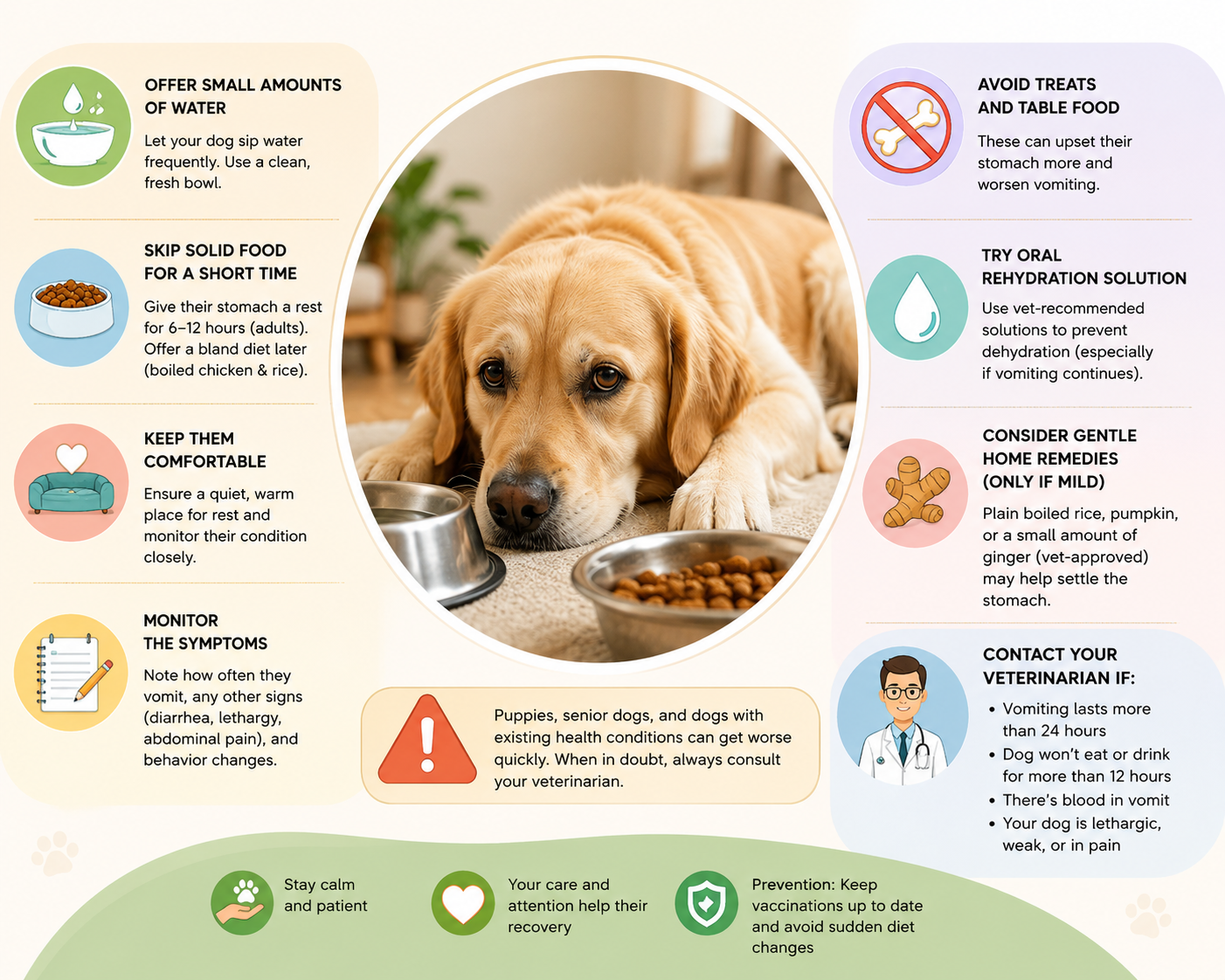
Let’s go through a step-by-step plan of what to do if your dog refuses food, water and vomits.
Take a step back and just observe.Step 1: Stay calm and observe
First, stay calm. Keep an eye on your dog. Record its vomiting frequency, its vomit characteristics and if it has other symptoms such as diarrhea, lethargy or bloating. This will be useful to your vet.
Withhold food temporarily: Step 2
Give your dog’s digestive system a rest. Avoid giving food for the next 12-24 hours for adult dogs. Puppies can become hypoglycemic (low blood sugar) within 12 hours of not eating a meal.Puppies can become low on blood sugar in less time than 12 hours if they have not had food.
Small amounts of water should be offered in Step 3
If your dog is vomiting, it is still imperative to keep him hydrated. Provide water in small increments (a few tablespoons at a time). If a person has vomited, they may need to drink large amounts of water which can result in further vomiting. Ice chips can also be used for a slow feed of water.
If your dog also refuses all water and he/she still vomits, call the vet. IVF might be required.
Step 4: Gradually Add in Bland Food
Once vomiting has ceased for 4-6 hours, small amounts of bland food are to be given. The tried and tested advice is to eat boiled rice with plain boiled chicken (no seasoning). Spend more time giving smaller amounts of food throughout the day.
If your dog responds well, slowly reintroduce him to his regular food over 2 or 3 days.
5. Contact Your Vet
As long as your dog appears to be doing better, it is always wise to call your vet. Describe the symptoms, duration, and other relevant information such as possible exposure to garbage, toxins, or foreign objects.
Your veterinarian can determine if you should keep the animal at home or take him/her to the clinic.
Your veterinarian will investigate the cause of your dog’s throwing up or not eating/drinking
At your vet visit, the vet will conduct a comprehensive physical exam of your dog. If they find what they’re looking for, they may suggest several tests.
Common Diagnostic Tools:
- Blood tests – These will look for kidney disease, liver problems, pancreatitis, infections, and other abnormalities.
- X-rays or ultrasound — These can detect foreign objects, intestinal blockages, bloat and organ abnormalities.
- Fecal examination — This is a test looking for parasites that may be responsible for loose stools and poor appetite.
- Urinalysis — This will check kidney function and can detect infections.
From the findings, your vet will create a treatment strategy that is unique to your dog’s condition.
Treatment Options for a Dog that Won’t Eat and Vomits
Treatment will be based on the cause. Some of the most common methods veterinarians use.
In cases of mild gastroenteritis or in case of diet indiscretion:
Usually these are treated with fluid (by mouth or intravenously), anti-nausea drugs and a bland diet. The majority of dogs will make a complete recovery in several days.
For pancreatitis:
Treatment includes intravenous fluids, pain control, anti-nausea drugs, and will require a low-fat diet in the future.
For intestinal obstruction:
Surgery is generally needed to extract the foreign body. The earlier surgery can occur, the better the prognosis.
For parvovirus:
Extensive supportive care is required — intravenous fluids, antibiotics to protect against secondary infections, anti-nausea drugs, and possibly plasma transfusion. Early treatment has much higher rates of survival.
If you have kidney or liver disease:
Long-term special diets, medications and monitoring are needed for these conditions.
How to stop your dog vomiting and not eating
Although not all causes are preventable, there are a number of things you can do to minimize the risk of your dog refusing to eat or drink and getting sick.
Avoid storing hazardous materials nearby. Pick up small objects, be sure to keep trash covered, and store toxic items such as chocolate, onions and grapes out of your dog’s reach.
Provide regular access to good-quality feed. People often experience upset stomach when changing their diet in a hurry. If changing dog food, do so over 7-10 days.
Maintain up-to-date vaccines. Vaccines help prevent costly and debilitating diseases such as parvovirus and distemper, which cause vomiting and loss of appetite.
Avoid giving table scraps. Dogs get pancreatitis most frequently from eating high fat or rich foods.
Regular vet check-ups. Regular blood tests and physical examinations can help identify kidney disease, liver disease and other problems in early stages when they cause no serious symptoms.
Special considerations for puppies and senior dogs
When puppies and older dogs refuse food, refuse water and vomit they are more susceptible to problems.
Senior dogs may have a number of health issues such as kidney disease, liver trouble, and cancer. If a senior dog is not eating or drinking and starts vomiting, it could be a sign of an early problem with its organs or another serious disease. It is important to identify and treat the condition early for outcome and quality of life to be improved.
Conclusion: Take Your Dog’s Symptoms Seriously
Key is to watch your dog carefully, pay attention to warning signs and respond promptly if something doesn’t feel right. If your dog refuses to eat and vomits, don’t delay too long in getting professional help. giving him a quick call to your vet will help.
Your dog doesn’t have the ability to tell you how he feels. But its behaviour says it all. Listen — and follow your instincts as a pet owner.