
Introduction
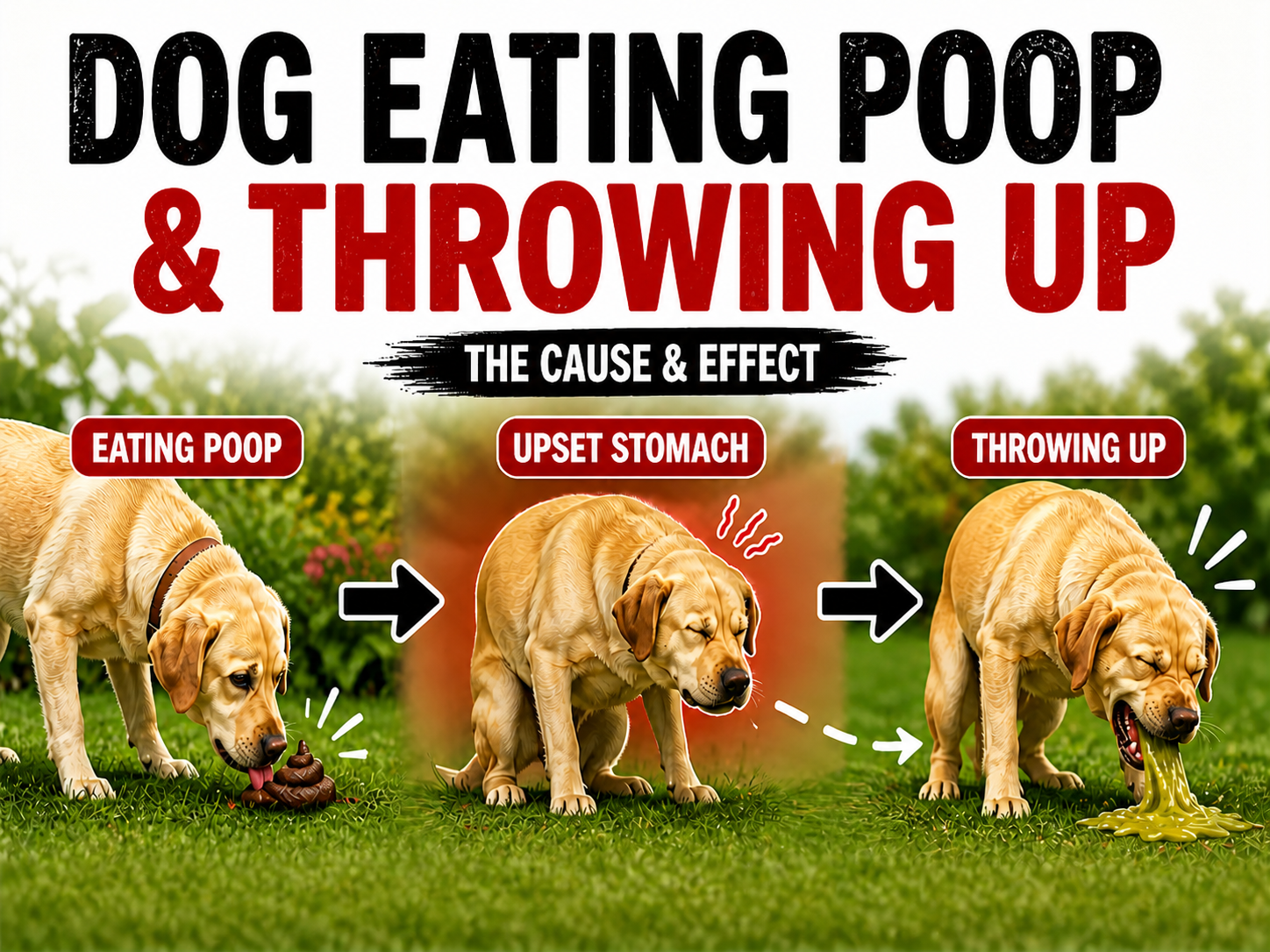
Dog Eating Poop and Throwing Up can be a worrying situation for any pet owner. Did your dog ever eat poop and then throw up soon after? If yes, you are not alone. Many dog owners face this unpleasant problem. It can be frightening to see, and most pet parents are left with many questions. Why does a dog eat feces in the first place? Why does it make them vomit? More importantly, what should you do about it now?
In this article we shall take you on a walk through and show you all you need to know. We will discuss why this behavior occurs, what are the health risks associated with the behavior, and what can you do to prevent the occurrence of the behavior again. Let us dive in.
What Is Coprophagia? The reason why dogs eat poop
The scientific name for Dog Eating Poop and Throwing Up is linked to a behavior called coprophagia, which means a dog eating feces. This may sound worrying, but it is a fairly common dog behavior. While it disgusts most owners, it is important to understand that not all dogs do it out of revenge or poor training. There are real underlying reasons behind this habit.
Dogs can even eat their own feces, or the feces of another dog, or even the feces of another animal, such as a rabbit or a deer. Every situation has its respective risks and causes.
Some of the most frequent reasons why dogs eat feces.
A dog may eat poop due to a number of reasons. There are those that are behavioral and those that are medical.
Behavioral causes include:
- Boredom or anxiety
- Attention-seeking behavior
- imitating other dogs (particularly puppies)
- Maternal learning (licks puppies clean)
- Living in a confined or stressful environment
Medical causes include:
- Nutritional deficiencies (particularly in vitamins and minerals)
- Malabsorption syndromes where the dog is unable to absorb the nutrients properly.
- The parasites which make the dog feel that it is always hungry.
- Enzyme deficiencies
- It can be accompanied with such conditions as diabetes or thyroid disease that make people feel hungry.
- Side effects of some drugs such as steroids.
Dog feces eating and vomiting in most cases go hand in hand as the digestive system is not able to digest the material that has been consumed. Feces are made up of bacteria, parasites and in rare cases undigested food which the stomach is unable to digest.
Why Does Eating Dog Poop (Martha) Cause Vomiting?
When a dog eats poop and throws up, then the body is usually attempting to get rid of something bad. Vomiting is a normal defense mechanism. When a foreign or toxic substance is detected by the stomach, the stomach pushes the substance back out.
Following are the most frequent causes why a dog throwing up after eating feces happens:
1. Bacterial Contamination
Feces contain high bacteria load, including E. coli, Salmonella, and Clostridium. When a dog consumes stool these bacteria enter the digestive tract. Many of them are killed by the acidic environment of the stomach. A high bacteria load, however, may cause the system to overload and result in vomiting as a protective mechanism.
2. Sool parasites
When the feces are of an infected animal, they can also be contaminated with eggs/larvae of a parasite. Some of the common culprits are roundworms, hookworms, Giardia and Coccidia. These parasites may result in gastrointestinal illness when they are inside the body of the dog.
3. The Smell and Taste Itself.
The dog that eats poop and throws up, sometimes, is simply a reaction to the strong odor or taste. It can easily irritate the stomach. This is particularly so when the dog had consumed a lot of stool.
4. Foreign Substances in the Feces
When the dog has consumed feces of another animal which also consumed something that was poisonous to it such as some plants, some medications, or some chemicals then that can be passed through and cause your dog to vomit. It is referred to as relay toxicity and it is an issue of serious concern.
5. Rapid Ingestion
Dogs do tend to consume feces too fast. The unnatural contents and overeating too fast may disturb the stomach, which will vomit almost instantly.
Health Hazards of Dogs eating feces and vomiting
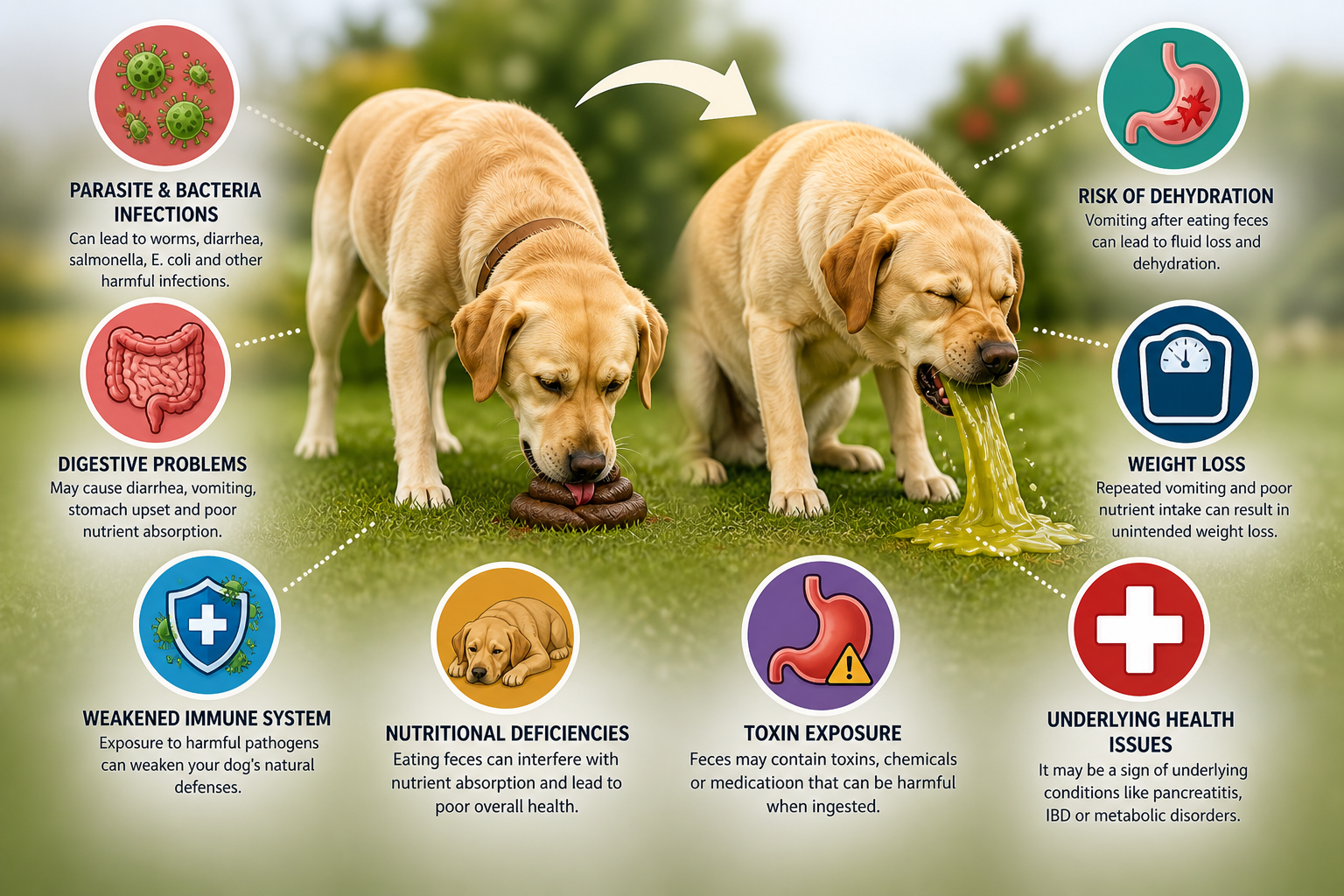
Dog Eating Poop and Throwing Up can involve real health risks. Although one episode may not be a serious emergency, repeated behaviour or severe symptoms should be addressed quickly by a vet.
Risk of Parasitic Infection
This is among the greatest risk factors. Most intestinal parasites are transmitted by fecal-oral routes. When your dog eats the poop of another animal, it may pick up worms or protozoan parasites that can cause long-lasting digestive problems.
Spread of Bacterial Disease
Certain bacteria such as Salmonella are capable of causing severe disease to the dogs and in some instances, they can even infect a human being. When your dog feeds on infected feces, throws up, those bacteria might be in the vomit too. Gloves and proper hygiene must always be used to handle the situation.
Nutritional Imbalance
When your dog is feeding on poop as a result of a nutritional deficiency, the underlying issue will develop over time unless it is treated. The vomiting imposes an additional load on the body and does not allow the absorption of nutrients.
Dehydration
The frequent vomiting causes dehydration. Dehydration in dogs is life threatening and can develop very fast particularly in puppies, older dogs or those with underlying health issues.
Toxin Exposure
As it has been stated above, feces of other animals might be contaminated with some harmful substances. Relay toxicity is not predictable. You might not be aware of what the animal initially fed on.
Immediately I should see a Vet.
The major question that most dog owners ask themselves is when can a situation turn into a veterinary emergency. The following are the warning signs that indicate that you need to contact your vet immediately:
- Vomiting that is not cessated in a few hours.
- Vomit or stool containing blood.
- Symptoms of severe laziness or frailty.
- Intense pain (hunching, whimpering, bloating) in the abdomen.
- Anorexia on more than 24 hours.
- Suspected ingestion of toxic feces (of an animal that has been medicated or is ill)
- The dog is a puppy, aged, or with a weakened immune system.
Do not take too long when your dog ate poop and is now repeatedly throwing up. One episode of vomiting after the intake of feces can be self-limiting. Nevertheless, constant vomiting indicates that there is something bigger at stake.
Diagnosis of Underlying Cause
Your vet will be required to check your dog to determine what is causing the coprophagia and the vomiting. Anticipate the following diagnostic process:
- Physical examination to check the general health and abdominal tenderness.
- Fecal test to check for parasites and bacterial infections
- Blood tests to check whether there are nutritional deficiencies, organ problems or hormonal problems.
- Urinalysis to exclude kidney or metabolic problems.
Imaging such as X-rays or ultrasound might be prescribed in certain situations. When the cause is known, treatment will be much more specific and effective.
Therapy to Dog Eating Poop and Throwing Up
The treatment solely relies on the causative agent. Below is a list of the most popular ways.
For Parasites
In case a fecal test results in parasites, your vet will receive a deworming drug. Depending on the type of parasite, common ones are fenbendazole, pyrantel, or metronidazole. Frequent deworming can also be a good preventive measure.
For Bacterial Infections
Antibiotics are used in treating bacterial infections. Depending on the kind of bacteria, your vet will decide on the correct antibiotic to use. During recovery, supportive care (hydration and bland diet) is frequently recommended.
For Nutritional Deficiencies
The first step is often switching to a high quality well balanced dog food. Other supplements that may be prescribed by your vet include digestive enzymes, probiotics or certain vitamins. Other dogs are lucky to have a raw or fresh diet, when the food they are currently eating does not have a digestibility level.
For Behavioral Causes
In behavioral coprophagia, there is a need to approach differently. The following are some of the effective strategies:
- Supervise outdoor time and clean up feces immediately after the dog goes
- Deterrents – there are commercial preparations, which make the poop taste bad to the dogs.
- Increase mental stimulation by toys, training and interactive play.
- Decrease anxiety by means of behavioral training or in particular instances by medication.
- Seek the advice of a veterinary behaviorist in case the habit is very entrenched.
How to make sure that your dog does not eat poop.
Always better than cure is prevention. After knowing the reasons why your dog eats feces and vomits, you can take some practical measures to put an end to the cycle.
Conserve the Environment.
This is the best prevention measure. As soon as possible, pick up feces in your yard and during walks. A dog will not eat something that is not available.
Eat High Quality Diet
Ensure that the food of your dog is all that it needs in terms of nutrition. Find a formula that suits the age, size and health condition of your dog. Discuss with your vet whether you are not sure of the best food to feed your pet.
Add Digestive Enzymes
Dogs are known to consume poop since their food is not being digested correctly. To enhance nutrient absorption and decrease the desire to find feces, they can add digestive enzymes or probiotics to their meals.
Use Taste Deterrents
There are also products that can be added in the food of your dog so that it avoids being bitten. They render the stool bitter or unpleasant, making re-ingestion unpleasant. They are safe, but results vary between dogs.
Give Enrichment and Exercise
Bored dog seeks to be stimulated in the most unpleasant locations. Exercise, intellectual stimulation and socialization can go a long way in decreasing poop-eating behavior.
Train the “Leave It” Command
One of the most helpful of these prevention tools in your arsenal is a strong leave it command taught to your dog. Trained regularly, it is able to put your dog at a standstill before it can get to any stool.
Will Dog Eating Feces and Vomiting be Harmful to Humans?
Yes, it can. It is a significant issue that can be easily neglected by many owners. Zoonotic diseases – diseases spread between animals and humans – may infect the animals when they eat infected feces. Bacteria or parasites picked by the dog may be transmitted to humans by licking, close contact or improper hygiene.
It is always advisable to wash your hands properly after touching your dog, especially during a Dog Eating Poop and Throwing Up situation. Do not let your dog lick your face after coprophagia. Use protective gloves and disinfect the affected area properly to reduce the risk of germs and infection.
In case gastrointestinal illness appears in any of the members of your household, particularly in children or persons with weakened immunity, seek medical help as soon as possible.
A Notice about Puppies and Poop Eating
Compared to adult dogs, puppies have high chances of engaging in coprophagia. In part this is because of the curiosity and in part because they learn by putting things in their mouths. Mother dogs, also lick their puppies to stimulate elimination and clean them, so young dogs grow up with some familiarity with feces.
The majority of the puppies grow out of the behavior within 9 months of age. Nonetheless, when it becomes persistent or is followed by the occurrence of repeated vomiting, it is worth discussing with your vet. It can be prevented before becoming a long-term habit through early intervention.
Conclusion: how to help a dog that eats poop and throws up
It is never a good experience when you see Dog Eating Poop and Throwing Up happen in front of you. However, it is important not to panic. In most cases, the situation does not take long to resolve. One episode may not require emergency treatment, but it is always a good idea to understand the causes, monitor symptoms, and contact your vet when needed.
When the behavior recurs, then it is important. Probably a medical or behavioral problem must be dealt with. Through proper diet, surroundings and proper counseling by a veterinarian, most dogs can completely break this habit.
Always be observant, act, and in any way ensure that you have taken care of the health and well being of your dog