

Sometimes dogs are so bizarre. This is one of the most confusing behaviors that a pet owner observes when his or her dog is eating grass. You take them out to have a little bathroom break, and the next moment they are prattling like a little four-legged cow. Is it normal? Is there anything to worry about? The fact of the matter is that the majority of dogs at some time in their lives eat grass and the reasons as to why they do so are more interesting than you may imagine.
This article will take you through all that you need to know about dogs eating grass including the science behind it as well as when you should call your vet.
Are Dogs supposed to Eat Grass?
Yes, it is completely normal. Dog eating grass is one of the most common behaviors veterinarians hear about from pet owners. In fact, studies suggest that grass eating is a normal part of canine behavior, observed in wild canids like wolves and coyotes as well.
So, if your dog occasionally munches on your lawn, you are not alone. Most dogs do it, and the vast majority of them are perfectly healthy. However, understanding why they do it can help you make better decisions for your pet’s care.
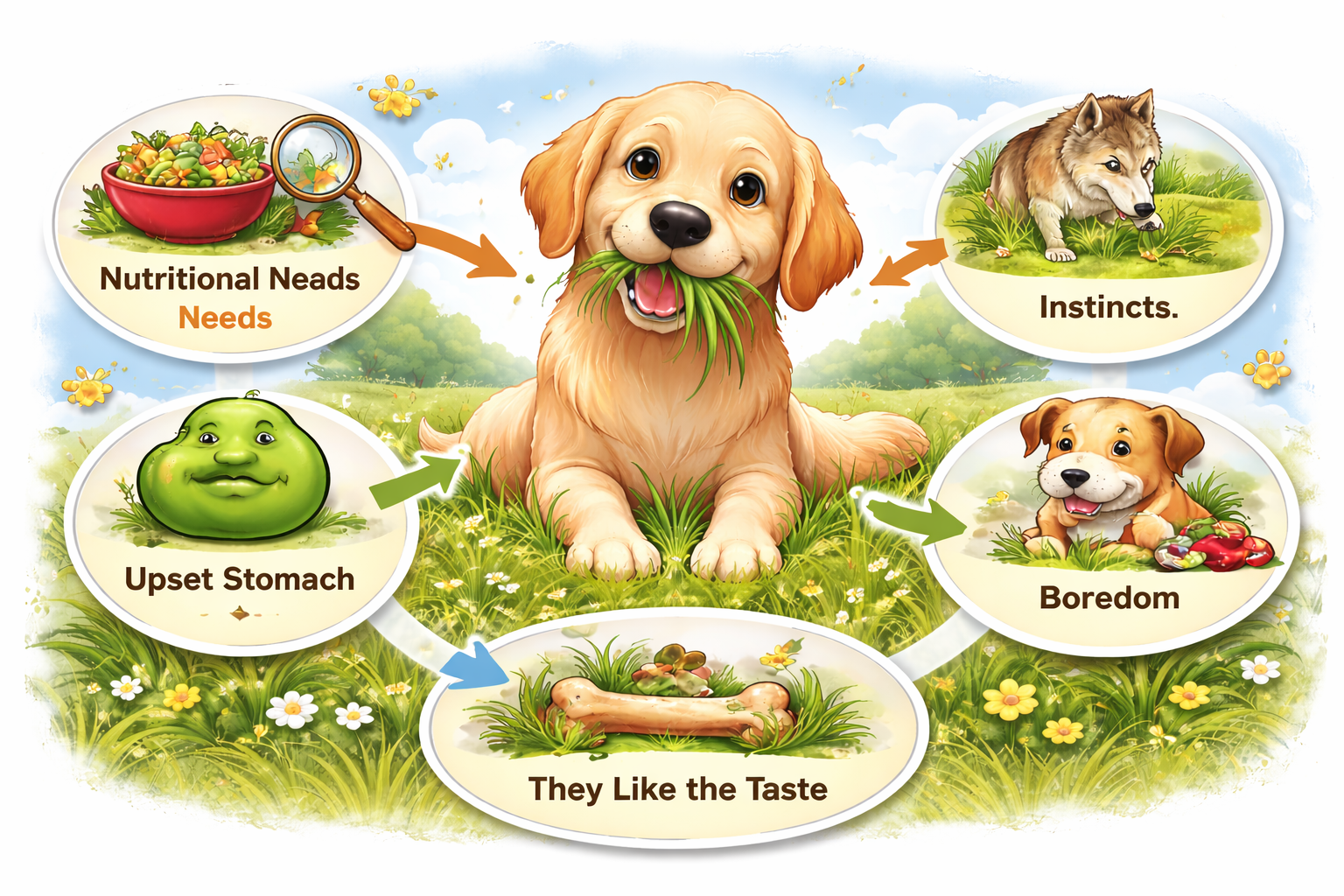
Why Do Dogs Eat Grass? The Most Common Reasons
An explanation of dog eating grass is not universal. There are a number of theories and the actual cause can be so much related to the dog.
1. They Simply Like the Taste
The most basic explanation is sometimes the best. Dogs consume grass as they like it. The taste of grass is fresh and somewhat sweet–particularly at the first of spring and in early summer when it is young and tender. Certain dogs are picky on what patches to graze on which helps to support the point that taste and texture are contributors.
This is most likely the most probable answer, when your dog happily chews on grass, and does not seem to be suffering.
2. Instinct and Pre-cultural Behavior.
The descendants of dogs are wild creatures that consumed entire prey animals. The prey species tended to contain plant matter in their stomach. Thousands of years ago, the digestive system of dogs evolved to be able to process plant- and meat-based food. Some of those wild roots might have been the reason behind eating grass.
Other researchers think that the grass and other vegetation eating is a self-regulating behavior. Wild dogs did it. It is done by domestic dogs. It can just be encoded in their genes.
3. Fiber and Nutritional Requirements.
The other widely used theory is that, dogs consume grass when they lack something in their food especially fiber. Grass contains large amounts of fiber and this aids in the healthy digestion and passing of bowels.
In the event that your dog is consuming grass very often, it could be wise to consider their dieting strategy. Do they receive sufficient fiber? Do they have a high-quality, nutritionally balanced food? In some cases a mere diet change will cut down on grass consumption considerably.
4. Boredom or Anxiety
Bored or anxious dogs tend to develop abnormal behaviors and dog eating grass may be one of them. When you leave your dog to spend very much time in the yard, they might graze just because they have no other activities to do.
Keep an eye on other indicators of boredom, such as excessive barking, digging, and chewing of household items. When these habits are coupled with grass eating, then your dog is likely to require additional mind-stimulation and physical activity.
5. An Upset Stomach
It is this theory that most people are acquainted with. Most dog owners think that their dogs consume grass so as to make themselves sick when nauseous. The reason is that dogs resort to grass as a natural cure to an upset stomach.
Surprisingly, this is not entirely backed up by research. A study conducted has revealed that less than a quarter of dogs that consume grass really vomit after doing so. Majority of the dogs consume grass, and there is neither sickness before nor after.
However, not all dogs seem to avoid eating grass, some dogs do seem to eat grass intentionally when they are ill, chewing it down fast and in large quantities and then throwing it up soon after. This is unlike the relaxed and casual grazing that most dogs involve themselves in.
Does Dog Eating Grass Indicate They Are Sick?
Not necessarily. In the majority of cases, a dog who eats grass is well and happy. Nevertheless, there are scenarios when it may indicate a problem.
When to worry your dog is eating grass.
Pay attention to the pattern of the behavior. These are some of the signs that should be looked into more:
Sudden interest in eating grass– When your dog has not been a big eater of grass and suddenly this time they cannot stop eating grass, it is worth noting the change in behavior.
Grass, and then vomit all the time – Sometimes vomiting is as much as eating. However, in case your dog is always eating grass and throwing it up, his stomach is likely to be troubling him frequently. This may indicate bowel diseases such as inflammatory bowel disease, acid reflux, or gastritis.
Consumption of grass and other signs – Monitor – Feeling of lethargy, diarrhea, loss of appetite, or bloody diarrhea. These symptoms along with frequent eating of grass are an obvious cause to visit your vet.
consumption of non-edible objects in general – When your dog consumes non-edible objects such as dirt, rocks, paper, and others, the act is referred to as pica. Pica may be an indicator of nutritional problems or mental problems and must be assessed by a specialist.
In the majority of instances, however, the eating of grass by dogs is an innocent occupation. Peace of mind can always be ensured with a quick call to your vet in case of a doubt.
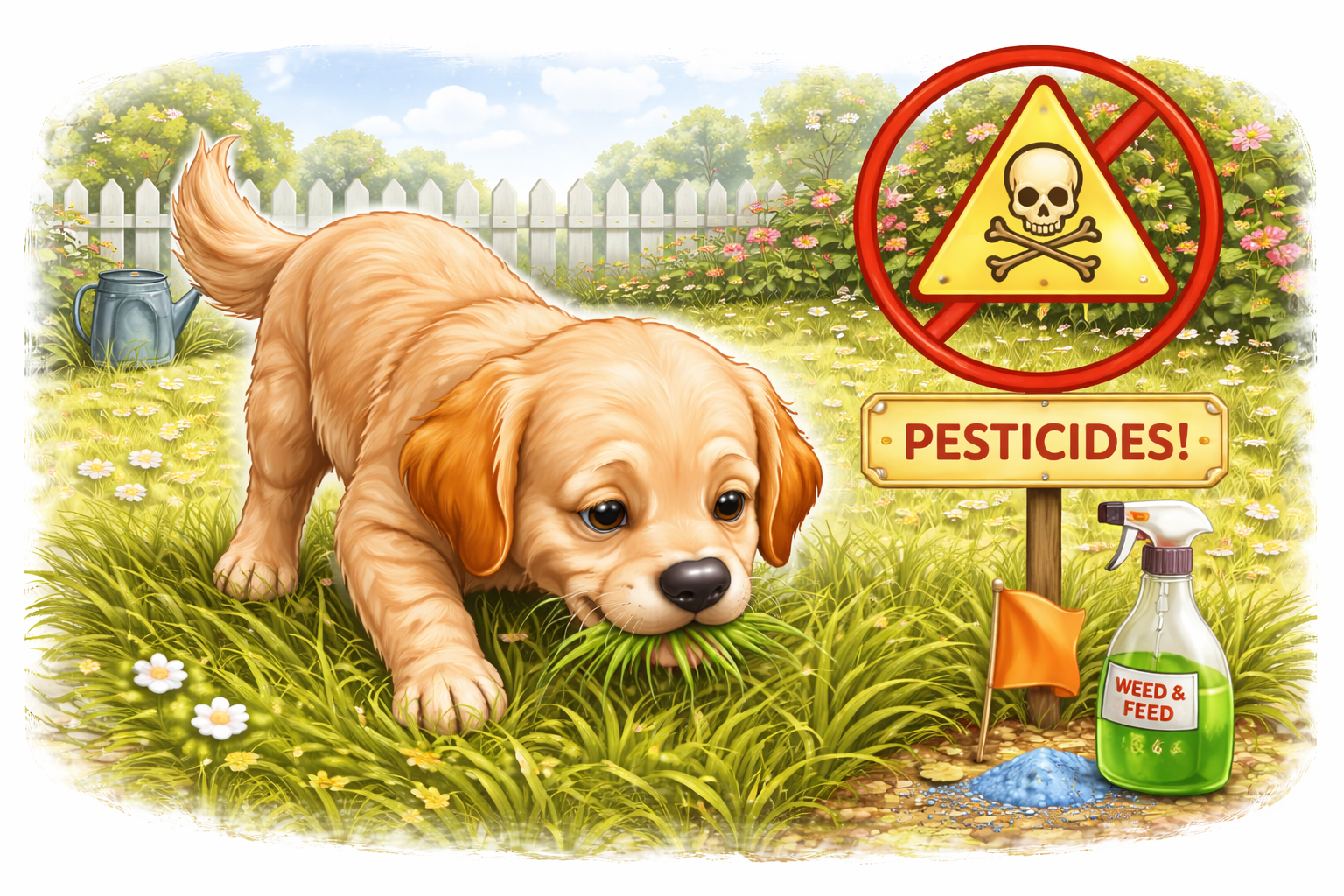
Is it Dangerous to feed Dogs Eating Grass?
Dogs are not toxic to grass. The situation under which they consume grass can be dangerous though.
Pesticides and Herbicides
This is the greatest worry of grass-eating by dogs. When your lawn or your neighbor has been sprayed with pesticides, herbicides or fertilizers, your dog may become very ill by eating this grass. The chemicals may lead to vomiting, diarrhea, tremor and in extreme cases, organ damage.
Always take care of the location your dog grazes. Keep them away from lawns that have been recently treated with chemicals. Most lawn care companies leave warning signs following treatment- take note of them.
Weeds Mixed with Grass.
There may be more than grass that grows in your yard. Grass can sometimes grow together with weeds, ornamental plants and ground cover. Dogs are poisoned by some common garden plants such as sago palm, foxglove and some mushrooms.
Ensure that you are aware of what is growing in your yard and eliminate plants that may be harmful.
Parasites
Intestinal parasites such as roundworms and hookworms can be found in grass especially when other animals are present in the vicinity. A dog that runs and eats grass in an area with a lot of animals in a park or any other open field is a little more likely to pick up parasites.
By maintaining the routine of deworming and parasite prevention of your dog, you are able to reduce this risk considerably.
How to Manage Dog Eating Grass
In case the eating of the grass is harmless, and you still desire your dog to eat less, here are some viable measures.
Improve Their Diet
Begin by assessing what you are feeding your dog. Change to a high quality food that has a real protein source as the first ingredient. A supplement of fiber or high-fiber foods such as cooked pumpkin or green beans should also be considered as adding to their meals. In some cases, it is just necessary to fill a nutritional deficiency to notice a decrease in grass consumption.
Enhance Physical and Mental Activity.
A dog that is not fatigued will be less likely to indulge in boredom behaviors. Ensure that your dog receives ample physical activity every day. Introduce puzzle feeders and training and interactive toys to stimulate their brain. A dog that is mentally stimulated has less to graze aimlessly.
Redirect the Behavior
When you find your dog eating grass, call them in and get their mind off it by playing with a toy or doing some kind of training. With time, they can be re-directed by being consistent so that the frequency of reaching the grass is lessened
Provide Dog-Safe Alternatives
Dogs just like to chew on plants. This desire can be fulfilled without any harm by planting a small pot of dog-safe herbs such as wheatgrass or barley grass. These offer a pesticide free and safe alternative that allows your dog to scratch that itch without the dangers.
Regular Vet Check-Ups
Regular check-ups can be used to identify any health problems at an early stage. In case of a regular or rising frequency of grass eating, then report it to your veterinarian during your next visit. Depending on their findings, they might suggest dietary modifications, gastrointestinal tests, or behavioural therapy.
Veterans Testimonies on Dog Eating Grass.
Most veterinarians seem to agree that a little grass eating is no big deal to make a fuss about. According to the American Kennel Club, eating grass is a natural dog behavior that is not necessarily bad. The watch and wait strategy is followed by most vets unless the behavior is excessive, compulsive or other symptoms are present.
In case a vet suspects a nutritional deficiency, he/she can prescribe a dietary assessment. In case of their suspicion of gastrointestinal disease, they may request bloodwork or abdominal ultrasound. Rarely, in situations where the behavior appears to be compulsive and anxiety-induced, behavioral therapy or even medication can be considered.
The most important message of the veterinary community is that context is important. There is normal casual, occasional grazing. Grass eating that is compulsive, frantic, or accompanied by symptoms is the subject of professional attention.
Quick Summary: Dog Eating Grass at a Glance
Factor |
What It Means |
| Occasional casual grazing | Usually normal and harmless |
| Eating grass and vomiting repeatedly | May indicate GI issues — see a vet |
| Grazing on treated lawns | Risk of chemical exposure — prevent access |
| Eating grass plus other non-food items | Could be pica — consult your vet |
| Dog seems otherwise healthy and happy | Likely just a natural behavior |
Conclusions about Dog Eating Grass.
Eating grass by the dogs is one such behavior that appears odd to us and it makes a lot of sense to the dog. It can be prompted by taste, instinct, boredom, a fiber craving or by an upset stomach, but it is generally within the normal range of canine behavior.
All you need to do as a pet owner is to take note of the pattern, familiarize yourself with your yard and follow routine visits to the vet. So long as your dog is eating grass nonchalantly, remains healthy, and does not exhibit any disturbing signs of distress, you can rest and leave your dog to have his or her little outdoor snack.
In case something ever seems amiss, follow your gut and call your vet. You see, you know your dog better than anybody else–and that places you in the best position to tell when it is worth borrowing.
1 thought on “Why my Dog eating Grass? All You Should Know”